

Blog IPFighter
LegionProxy review: Is it worth buying?
Picking the wrong proxy pool can quickly lead to account bans, persistent CAPTCHAs, and degraded automation performance. With proxy providers advertising bold figures around global coverage and session types, verifying actual node reputation and line speed before deploying them in production environments is essential.
In this LegionProxy review, IPFighter breaks down the provider's proxy infrastructure, pricing structure, and core features. Through hands-on benchmarks across multiple target countries, we test sample residential IPs for proxy detection flags, location accuracy, and connection throughput to help you determine if LegionProxy is worth adding to your stack. Show more

VPN checker: 4 signs your VPN is detected and how to check
When you use a VPN, websites may identify the IP address you are connecting from. This can lead to repeated CAPTCHA challenges, additional verification requests, or even account restrictions. However, seeing a "Detected" result on a VPN checker does not necessarily mean your real IP address has been exposed or your connection is insecure.
In this article, IPFighter explains the four criteria VPN checkers use to identify VPN connections and shows you how to use IP Lookup, IPFighter's free IP lookup tool, to find out whether your VPN is being detected. Show more

What is a clean IP address and how does it work?
An IP address can affect how websites, online services, and security systems evaluate a connection. That is why terms such as "clean IP" and "IP pure" often appear when people discuss proxies, account access, email delivery, and online privacy. But what makes an IP address clean, and how can you check whether yours has a good reputation?
In this guide, IPFighter explains what a clean IP means, which factors influence IP reputation, how to check an IP address, and what you can do if it appears on a blacklist. It also clarifies the differences between a clean IP, a fresh IP, and a dedicated IP so you can choose an address that suits your needs. Show more
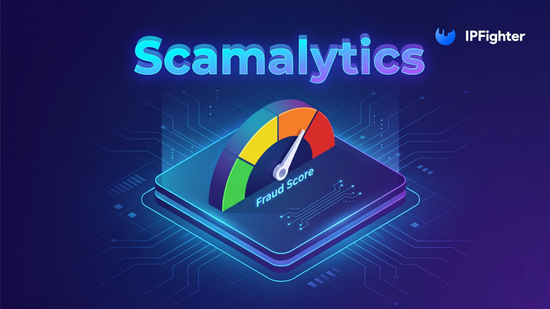
What is Scamalytics? 4 Fraud Score risk levels
Scamalytics is an IP fraud risk assessment service that assigns Fraud Scores ranging from 0 to 100, divided into four risk levels from low to very high. According to Scamalytics, these scores are calculated based on confirmed fraud reports collected through its partner network. This means an IP can receive a high score even if it has never been directly reported, for example, when it belongs to the same network as IPs with a history of fraudulent activity.
In this article, IPFighter will explain what Scamalytics is, how its system evaluates IP addresses, what each Fraud Score level means, and how to check an IP on the website. You'll also learn how to identify the reasons behind a high score, choose appropriate solutions, and understand the limitations of using Scamalytics. Show more
DNS blacklist: How to check and remove your IP
Have you ever sent an email that never reached your customer's inbox, even though its content was completely legitimate? Your IP address or domain may have been listed on a DNS Blacklist, causing receiving mail servers to reject your emails. This not only affects email deliverability but can also disrupt your business operations.
In this article, IPFighter will show you how to check your IP against popular DNS Blacklists, interpret the results, and resolve blacklist issues. You'll learn how to identify the underlying causes and submit a delisting request to have your IP removed from a blacklist. Show more
Why Google says "Unusual traffic from your computer network"
Running into Google's "Our systems have detected unusual traffic from your computer network" alert can instantly halt your workflow - even when you are simply conducting routine web searches. Contrary to common belief, this warning rarely means your device is compromised; instead, it signals that Google's anti-bot algorithms are flagging high-volume requests from your shared connection, proxy, or active VPN node.
In this guide, IPFighter breaks down the underlying triggers behind this network alert and provides actionable steps to resolve it. You will learn how to troubleshoot flagged IP addresses, audit browser configuration issues, and restore uninterrupted access to Google Search. Show more
Anonymous proxy detected: Causes and how to fix it
Encountering the “anonymous proxy detected” warning while browsing can abruptly halt your workflow even when your internet connection is fully stable. This alert simply flags your proxy or VPN connection, indicating that your connection method has been identified by the site. In this article. IPFighter breaks down the core causes behind the issue and walks you through actionable troubleshooting steps to resolve the block. Show more
Aproxy review: Proxy options, pricing, and performance
Choosing a proxy provider involves more than checking its IP pool size. IP reputation, location accuracy, connection speed, session control, and pricing can all affect whether a proxy is suitable for a particular workflow.
In this Aproxy review, IPFighter examines all five proxy products offered by Aproxy, from rotating Residential proxies to Static Data Center proxies. We also test two selected product lines - Residential and Long Acting ISP - across five countries to see how their IP quality, location results, and connection performance compare in practice. Show more
AstroProxy review: Uncovering real speeds & IP quality
AstroProxy stands out in the market by offering a diverse proxy ecosystem-from residential and mobile to datacenter proxies-within a single management platform. In this IPFighter review, we take an in-depth look at its network size, features, pricing, and real-world test results to help you make an informed decision. Show more
FlashProxy review: Is this proxy network worth it?
Are you struggling to find a large-scale and high-speed proxy solution for your heavy automation campaigns? This in-depth FlashProxy review dissects its massive pool of 100 million residential IPs and 100% uptime commitment. We put its infrastructure to the test with real-world trials to provide unbiased speed and blacklist results. Read on to discover pricing starting from just $0.10/GB and find out if it is truly worth your investment. Show more
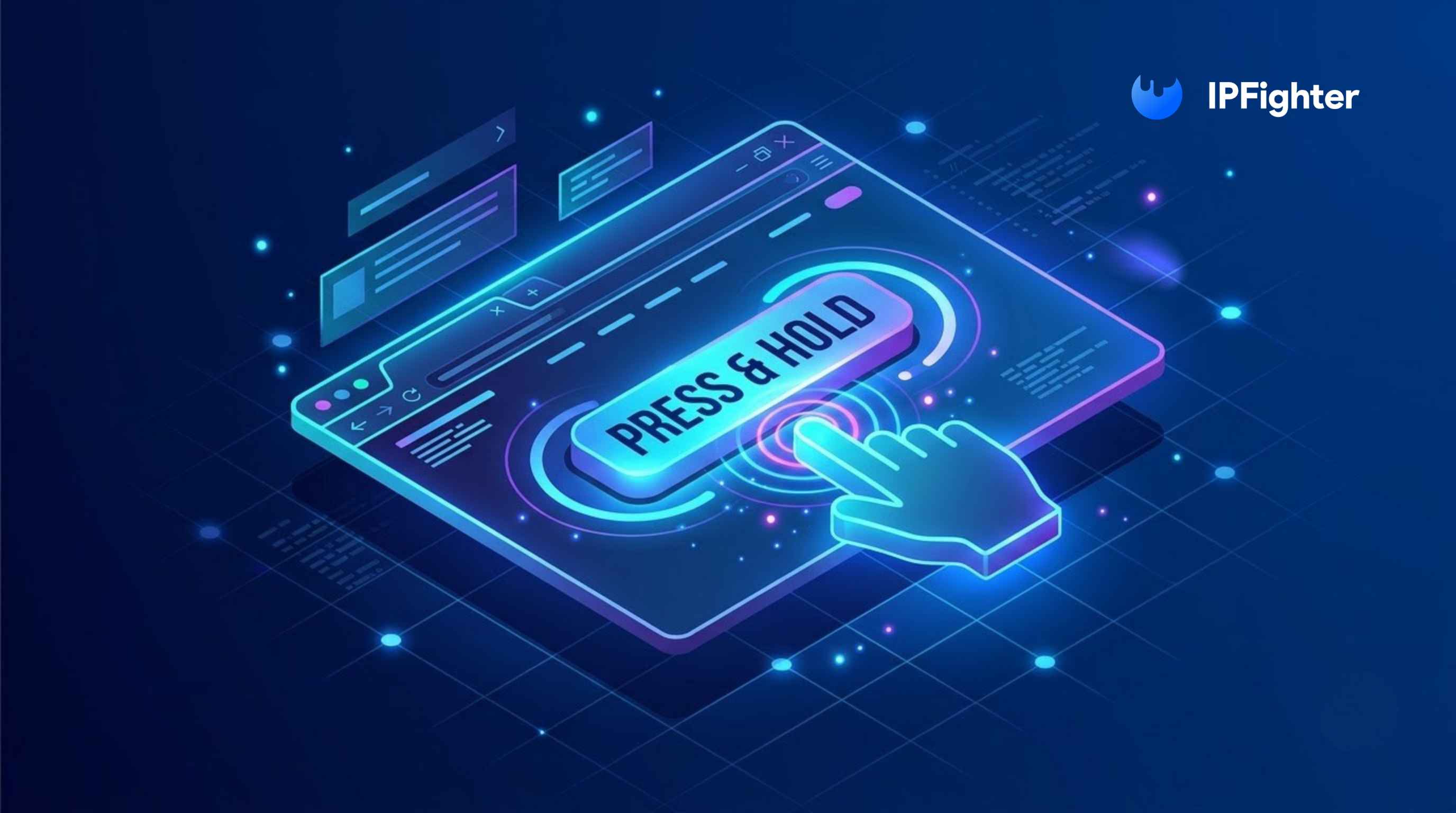
"Before we continue… Press & Hold": Why you see this check
Have you encountered a message saying “Before we continue… Press & Hold to confirm you are a human (and not a bot)” while trying to access a website? This press and hold CAPTCHA asks you to hold a button until the verification process finishes, but sometimes the challenge fails or keeps appearing even after you complete it.
In this guide, IPFighter explains what the check means, how to troubleshoot common failures, and how to recognize fake CAPTCHA pages. Show more
PrivateProxy review: Is it worth your investment?
PrivateProxy, a proxy provider based in the United Kingdom, has received fairly positive user reviews, with a rating of 4.7/5 on Trustpilot and 4.6/5 on G2. These are encouraging signs that suggest users are reasonably satisfied with the service. But do these ratings reflect its actual performance? Let’s put it to the test with IPFighter in this article. Show more
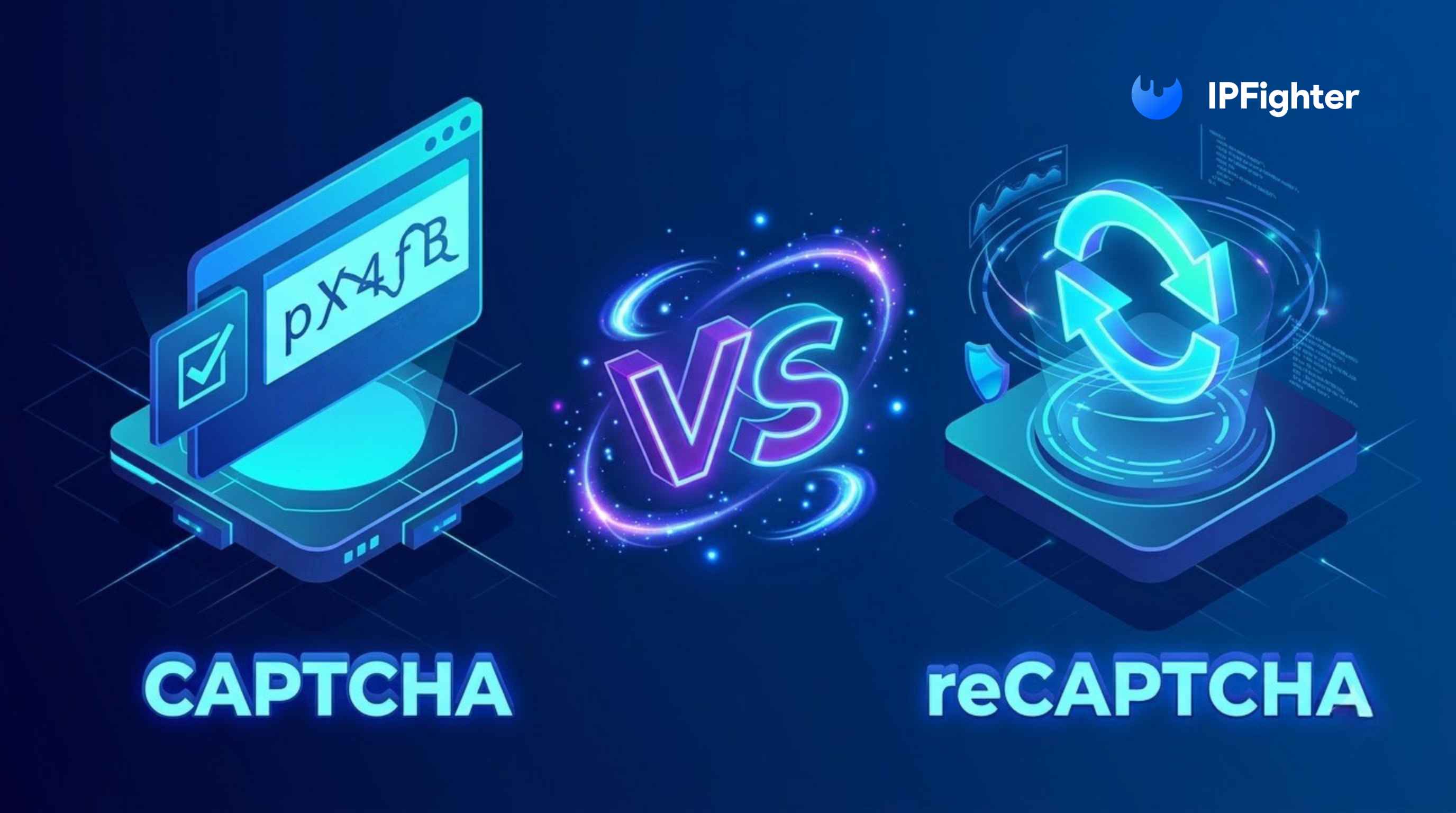
CAPTCHA vs reCAPTCHA: What’s the difference?
You have probably been asked to identify traffic lights, select images containing bicycles, or click a box labeled “I’m not a robot”. These familiar checks raise a common question: CAPTCHA vs reCAPTCHA - what’s the difference, and how does each help protect websites from automated traffic?
In this article, IPFighter compares CAPTCHA and Google reCAPTCHA, explaining how their verification methods, security approaches, and user experiences differ. You will also explore alternative anti-bot solutions and learn how to check your IP and browser environment when repeated verification prompts interrupt your browsing. Show more
Vision Browser review: A clear view of its fingerprint quality
Scaling multi-account operations across e-commerce, affiliate marketing, and crypto campaigns requires far more than just multiple windows - it demands complete isolated digital environments. An antidetect browser solves this by compartmentalizing profiles with unique hardware fingerprints, cookies, and proxy configurations to prevent cross-account association and security bans.
In this Vision Browser review, IPFighter examines the platform's primary features, pricing structures, and account creation workflows. We also run hands-on tests to assess its fingerprint authenticity and operational stability, giving you a clear look at whether Vision is the right tool for your multi-accounting needs. Show more

Why do I keep getting CAPTCHA? Here's what may be triggering it
Stuck in an endless loop of clicking traffic lights and crosswalks just to access basic websites? Endless CAPTCHAs do not mean your device is infected - instead, security algorithms are flagging your connection parameters, shared network traffic, or proxy configuration as potentially suspicious.
In this article, IPFighter explores why websites repeatedly demand human verification and how your IP reputation, VPN settings, and browser cookies impact these security checks. More importantly, you will learn practical troubleshooting steps to prevent these triggers and restore a seamless browsing experience Show more

What is a CAPTCHA? The check that separates people from bots
Whether it is selecting traffic lights in an image grid or simply clicking "I'm not a robot", CAPTCHAs are the ultimate digital security checkpoints standing between users and automated bots. Designed to analyze browser signals and distinguish human behavior from scripts, these verification challenges help platforms block spam, protect login gateways, and mitigate automated abuse.
In this article, IPFighter explores the mechanics behind CAPTCHA technology, the primary reasons websites enforce extra verification steps, and how different CAPTCHA variants function. We also share actionable methods to complete challenges efficiently and troubleshoot persistent verification loops. Show more