

Have you ever noticed that two IP addresses can behave completely differently online? One lets you browse smoothly, while another triggers CAPTCHAS, blocks, or constant verification requests.The reason behind this difference lies in two key concepts: IP reputation and IP purity.
In this article, IPFighter breaks down what IP reputation really means, how it works, how it relates to IP purity, and why it directly impacts your online performance.
1. Overview of IP reputation?
Before diving deeper, it’s important to understand that every action you perform online is tied to an IP address. If you’re not familiar with this concept, you can first explore what is an ip address to better understand how identification works on the internet.
Now, let's explore what IP reputation is and how it works.
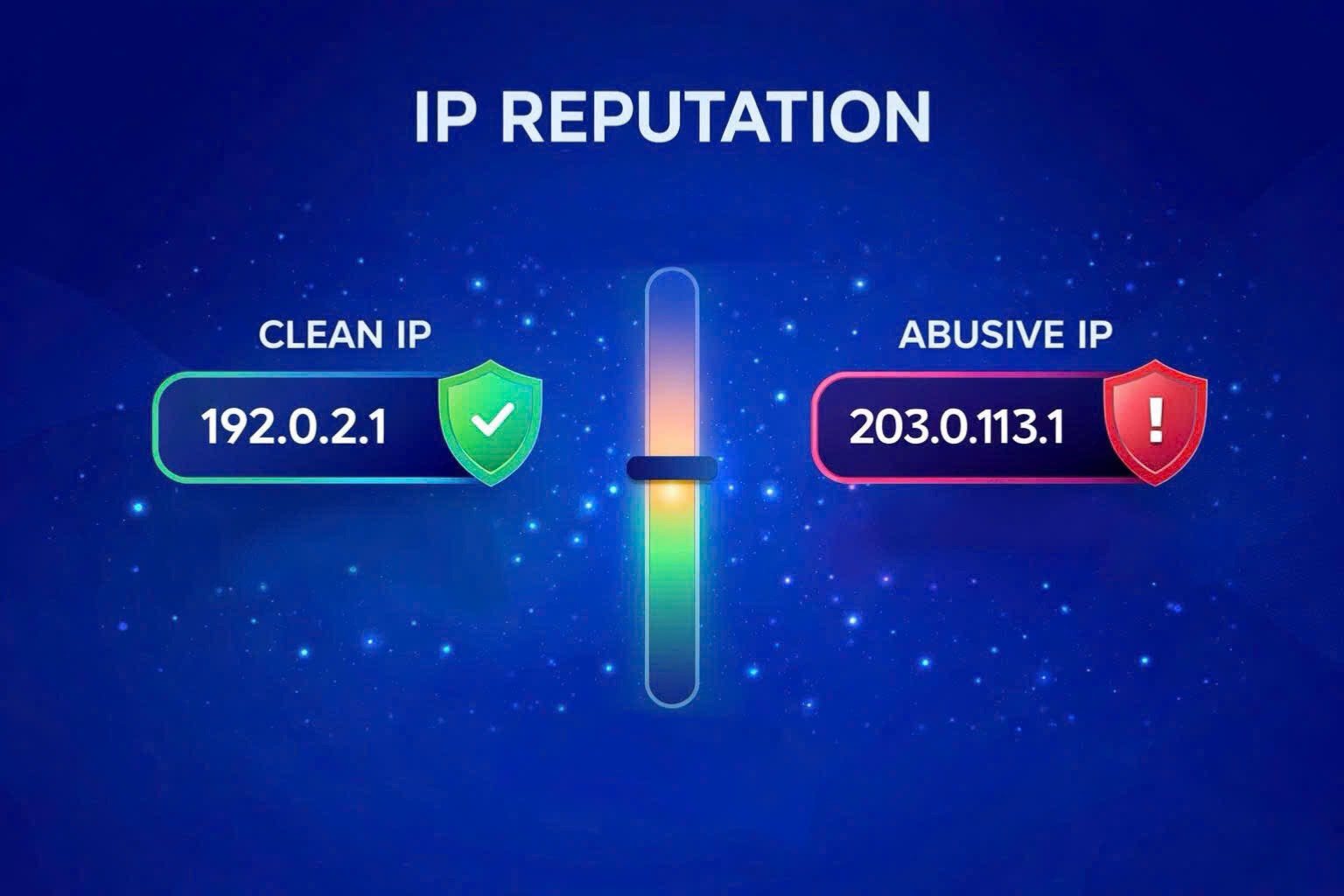
IP reputation
1.1. What is IP reputation?
IP reputation refers to the level of trust or credibility assigned to an IP address.
This “score” is built over time based on the historical behavior of that IP. If an IP has been consistently used for legitimate activities, it earns a good reputation. On the other hand, if it has been associated with spam, fraud, or abuse, its reputation decreases.
1.2. How IP Reputation works
Online platforms such as Google, Facebook, and email providers continuously evaluate IP addresses using multiple signals.
Specifically, they’re looking for signals such as:
-
Spam or fraudulent activity
-
Automated or bot-like behavior
-
Traffic patterns and consistency
-
Blacklist records
Based on these signals, systems decide how to treat your connection:
-
A good IP reputation results in smooth access and fewer restrictions
-
A bad IP reputation often leads to CAPTCHAs, blocks, or limited functionality
In short, simply put, a clean IP address makes platforms trust your behavior more, resulting in smoother internet access. Conversely, an abused IP address risks platforms flagging your suspicious behavior, thereby restricting your internet access.
It’s also important to note that IP reputation is not static. It constantly changes depending on how the IP is used over time. Even a high-quality IP can quickly lose its reputation if it starts generating suspicious traffic patterns. Likewise, a previously flagged IP may gradually recover if it is no longer associated with harmful activity. This dynamic nature makes continuous monitoring extremely important.
2. The relationship between IP reputation vs IP purity
The relationship between IP reputation and IP purity is closely related and mutually influential. Let's explore how they are connected.
2.1. What is IP purity?
IP purity refers to how “clean” an IP address is at the present moment.
A pure (clean) IP has not been abused, is not listed on blacklists, and shows no suspicious activity patterns.
2.2. Factors affecting IP purity
Several factors can affect the purity of an IP address:
-
Blacklist status
-
Historical usage (spam, automation, scraping, etc.)
-
Shared IP vs dedicated IP usage
-
Network type and provider
For example, shared IPs are more likely to become “contaminated” because multiple users contribute to the same history.
Additionally, the geographic origin of an IP can also influence its purity. IPs from regions frequently associated with spam or abuse may be subject to stricter scrutiny, even if they are currently clean. This means that choosing the right proxy location and provider is just as important as choosing the IP type itself.
2.3. IP purity vs IP reputation
Although closely related, these two concepts are not identical:
-
IP purity: current cleanliness of the IP
-
IP reputation: long-term trust score based on historical behavior
In other words, IP purity acts as a key input that directly influences IP reputation.
However, it’s possible for an IP to appear “clean” in the short term while still carrying a weak reputation due to its historical usage. This typically happens when an IP was heavily abused in the past but is not currently flagged. In such cases, platforms may still apply stricter checks until enough positive behavior is observed over time.
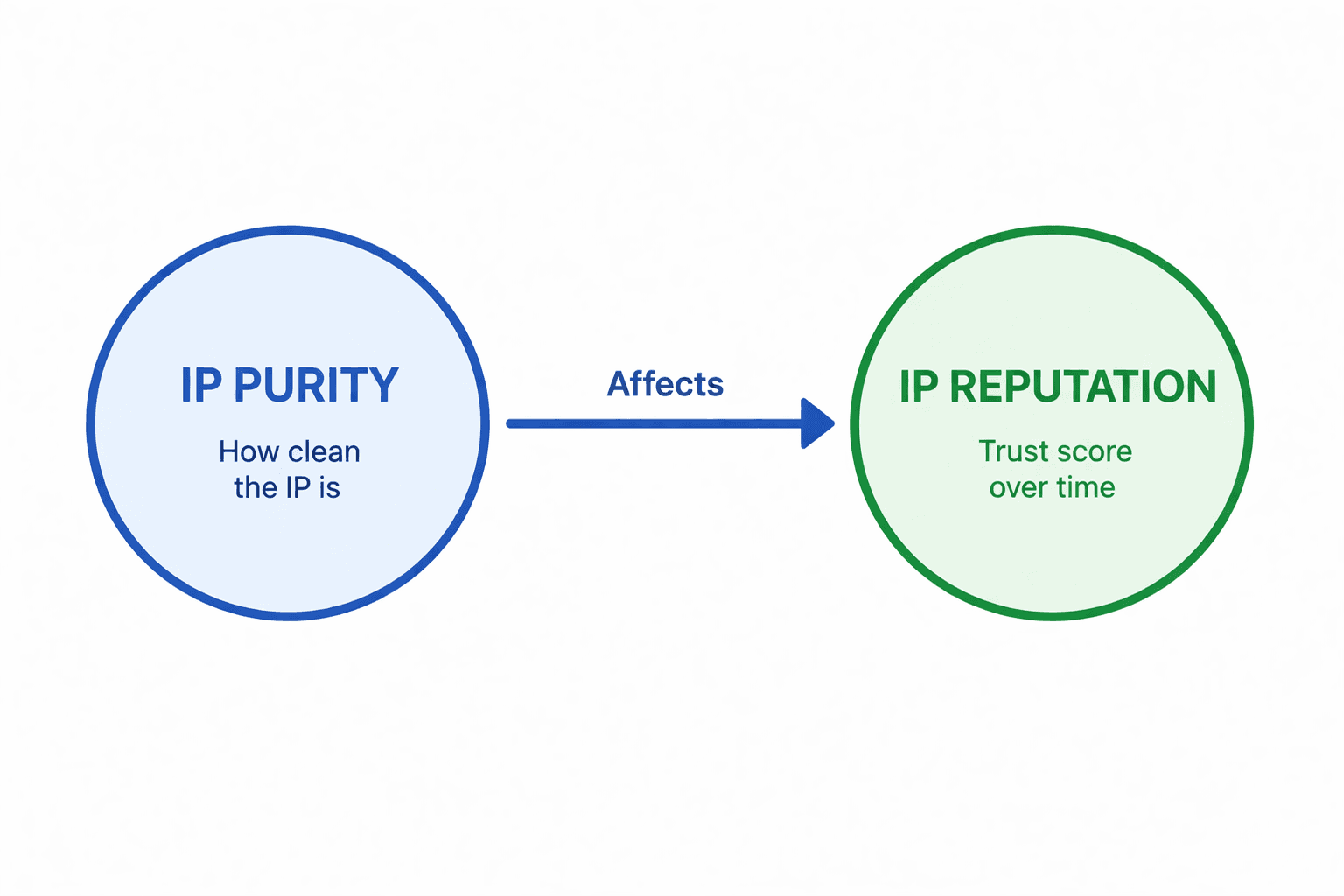
IP purity vs IP reputation
3. Why is IP reputation important?
Understanding IP reputation is crucial because it directly affects how you interact with online systems.
A poor IP reputation can lead to:
-
Frequent CAPTCHAs and access restrictions
-
Reduced email deliverability
-
Lower trust for social media, ads, or ecommerce accounts
-
Higher chances of being flagged by fraud detection systems
In more advanced scenarios, a poor IP reputation can also impact automation workflows, API integrations, and large-scale account operations. Systems may silently limit your actions without explicitly notifying you, making it harder to diagnose the root cause of performance issues. This is why many professionals treat IP quality as a foundational factor rather than a secondary concern.
Many platforms also evaluate additional factors such as provider data, which you can learn more about in what is an isp, as well as network types like what is private ip address.
Ultimately, your IP quality determines whether you are treated as a legitimate user or a potential threat.
4. Easy IP reputation checking with IPFighter
Instead of guessing if your IP is safe, checking IP reputation with IPFighter gives you a clear answer right away. This platform lets you see important details like your IPscore and automation signals that sites like Google or Facebook use to track accounts. This way, you can make sure your connection is "clean" before you start your work.
Beyond just reputation, IPFighter offers other essential checks to keep your setup secure:
-
Leak tests: Quickly find DNS or WebRTC leaks to make sure your real IP address is never exposed.
-
Browser & proxy details: Check your browser fingerprint and see exactly how your Proxy is performing.
-
Coupons & deals: Get exclusive promo codes from trusted proxy, VPN, and antidetect browser partners to save money on your setup.
By combining these technical checks with a great selection of discount codes, IPFighter helps you stay safe while keeping your operational costs as low as possible.
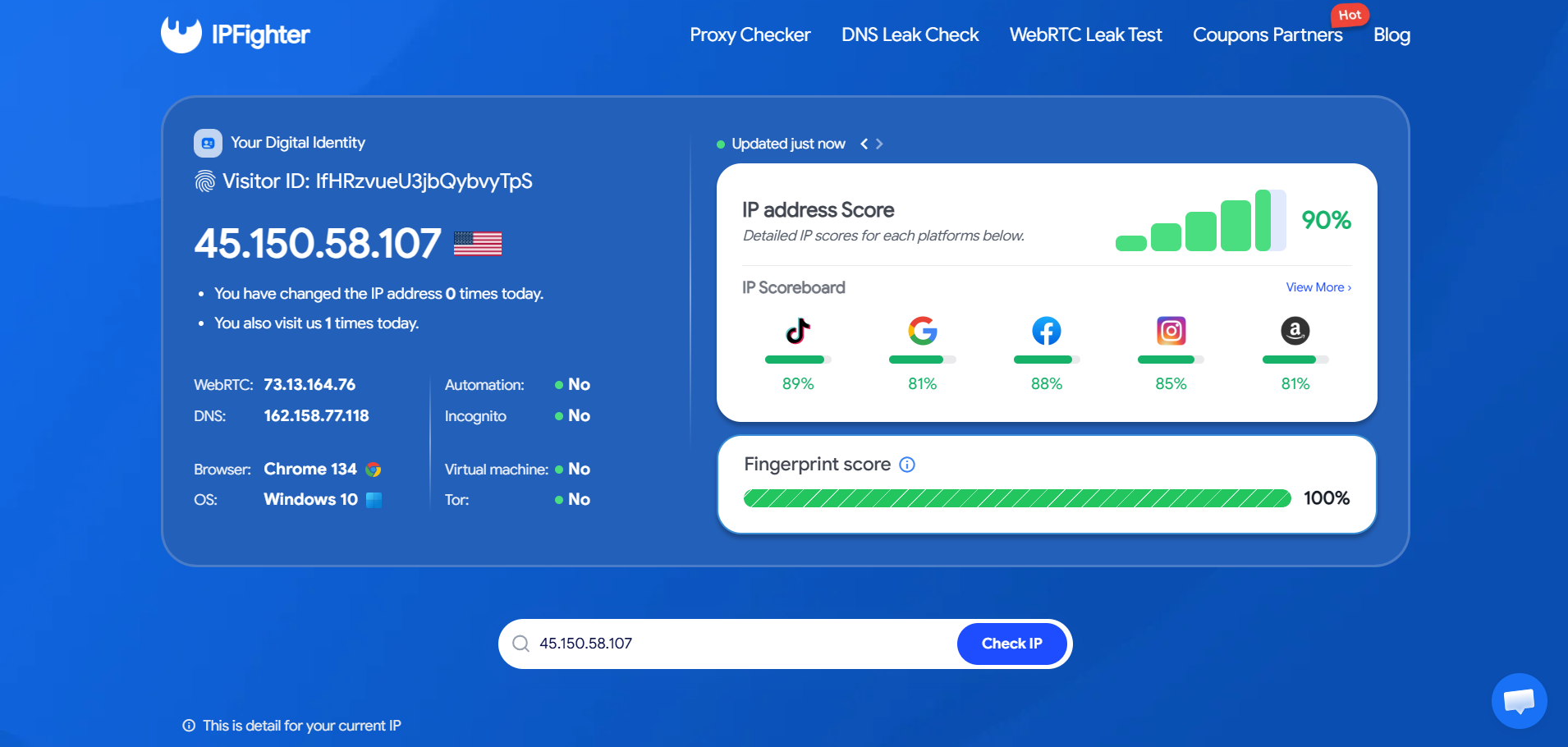
Check IP reputation on IPFighter
Learn more:
-
What is WebRTC? Exploring its architecture, use cases, and benefits
-
What is DNS? How the DNS System Works on the Internet
- How to improve IP score: A complete guide
5. How can I maintain a good IP reputation?
Maintaining a good IP reputation requires consistent and careful usage.
Some best practices include:
-
Avoid excessive spam or aggressive automation
-
Do not reuse previously “burned” or flagged IPs
-
Rotate IPs appropriately depending on your use case
-
Use high-quality proxies instead of unreliable sources
-
Regularly monitor your IP status
Another effective approach is to align your IP usage with realistic human behavior patterns. Sudden spikes in activity, inconsistent geolocation signals, or unnatural browsing behavior can all negatively impact your IP reputation, even if the IP itself is technically clean. Consistency and moderation are key factors in maintaining long-term trust.
In some cases, using a stable connection type like a static ip address can also help maintain a more consistent reputation over time.
6. Conclusion
IP reputation represents the overall trustworthiness of an IP address, while IP purity reflects how clean that IP is at a given moment. Not all IPs are equal, and their quality can significantly impact your online performance - from browsing experience to account stability.
Before using any IP for your work, make sure to check its quality first. Use IPFighter to analyze your IP reputation, detect potential risks, and ensure your connection is clean and reliable. Don’t forget to grab our exclusive proxy coupon codes and special offers from our trusted partners!
7. FAQ
What is the difference between IP reputation and IP purity?
IP reputation is a long-term trust score, while IP purity reflects the current cleanliness of an IP. Purity directly influences reputation.
Can a bad IP reputation be fixed?
Yes, but it takes time. You may need to stop harmful activities, switch to a clean IP, or request removal from certain blacklists.
How do I check my IP reputation?
You can use IP reputation tools and blacklist checkers. Tools like IPFighter provide a comprehensive overview of your IP quality.
What causes an IP to have a bad reputation?
Common causes include spam, automation abuse, shared P contamination, and repeated reports from platforms.
Is a static IP better for maintaining IP reputation?
In many cases, yes. A stable IP helps build a consistent history, which can improve trust if used properly.
Read more
What is an IP2 network? How it works, uses, and benefits

Explaining how to know if you have a DNS leak

How to know if you have a WebRTC leak: Reading your results
How to improve IP score: A complete guide
What is an IP fraud score? Reading the 0-100 scale
Mastering WebRTC control to prevent browser privacy leaks