

Anonymous Proxies is a Romania-based proxy service provider boasting an extensive network and a wide range of proxy options that offer users great flexibility - but does the actual performance live up to these advantages?
In this review, IPFighter takes an in-depth look at Anonymous Proxies, covering proxy types, features, pricing, setup processes, and performance. We also test specific IP addresses to evaluate IP quality, connection speed, latency, and geolocation accuracy.
1. General information
Before diving into the details, here's a quick overview of Anonymous Proxies and its core specifications.
|
Website |
|
|
Founded |
2010 |
|
Proxy types |
Datacenter, ISP, Backconnect, Rotating Residential, Rotating Mobile, Rotating Datacenter, etc. |
|
IP pool |
28M+ ethical proxy network in 190+ countries |
|
Protocol |
HTTP / HTTPS / SOCKS5 |
|
Pricing model |
Per IP or per GB, depending on product |
|
Payment |
Credit and debit cards (Visa, Mastercard, American Express, Discover, JCB, Diners Club, Maestro) and cryptocurrency. |
|
Refund |
Full refund for non-delivery or service defects; no refunds for third-party software incompatibility. |
|
Best for |
Scraping, streaming, downloading, gaming |
Discover more:
-
Best proxy providers in 2026: Compare top 6 services
-
Best mobile proxy providers in 2026: Hands-on testing results
-
Best residential proxy providers in 2026: Real-world tested
2. Proxy types available at Anonymous Proxies
Anonymous Proxies groups its proxy services into three main categories: HTTP, SOCKS5, and Other. It also offers VPN services, including WireGuard VPN and Amnezia VPN, as an additional connectivity option.
The HTTP section contains the largest selection, while SOCKS5 focuses on application-level tunneling and encrypted proxy connections, and the Other category covers Trojan and Smart DNS services.
2.1. HTTP proxies
The HTTP category covers six different proxy models, ranging from conventional datacenter IPs to residential, mobile, ISP, and rotating options. This gives users more flexibility to prioritize speed, IP reputation, persistence, or rotation depending on the target.
2.1.1. Datacenter proxies
Anonymous Proxies' datacenter proxies use IPs hosted in Tier-1 datacenter infrastructure and are positioned for high-volume tasks where speed and cost efficiency are important. Users can choose individual IPs rather than being limited to predefined packages.
-
Bandwidth: Unlimited
-
Coverage: 25+ countries
-
Rotation: Static
-
Protocols: HTTP, HTTPS, SOCKS5
The combination of dedicated IP selection, high bandwidth, and relatively low per-IP pricing makes this option suitable for scraping, SERP monitoring, automation, and other high-volume workflows.
2.1.2. ISP proxies
ISP proxies use IP addresses registered to real internet service providers while being hosted on datacenter infrastructure. Anonymous Proxies positions them as a middle ground between residential-level IP trust and datacenter-style performance.
-
Usage: Dedicated
-
Bandwidth: Unlimited
-
Rotation: Static
-
Protocols: HTTP(S) and SOCKS5
With dedicated IPs and unlimited bandwidth, ISP proxies are better suited to workflows that need stable sessions or persistent identities rather than frequent IP changes.
2.1.3. Backconnect proxies
Backconnect proxies use a single gateway while the provider manages the rotating IP pool behind it. This means users do not need to maintain a list of individual proxies or write their own rotation logic.
-
Gateway: Single endpoint
-
IP pool: Millions of rotating IPs
-
Rotation: New IP per request or according to the configured rotation
-
IP management: Automated
-
Protocols: HTTP, HTTPS
The single-endpoint setup simplifies large-scale scraping and other high-volume workflows where automated IP rotation is more convenient than managing individual addresses.
2.1.4. Rotating residential proxies
Anonymous Proxies' rotating residential proxies route requests through a large pool of residential IPs and can rotate the address per request or maintain a session when needed. The provider advertises millions of exit IPs and coverage across 190+ countries.
-
Advertised proxy pool: Millions of residential IPs
-
Coverage: 190+ countries
-
Rotation: Per request or session
-
Concurrent connections: Unlimited
-
Traffic: Non-expiring
The combination of residential IPs, flexible rotation, detailed geo-targeting, and non-expiring traffic makes this option particularly suitable for web scraping, price monitoring, ad verification, and location-sensitive research.
2.1.5. Rotating mobile proxies
Rotating mobile proxies provide access to 4G/5G mobile IPs that change automatically. Anonymous Proxies positions them for mobile-oriented targets, social platforms, and workflows where mobile-network IPs can offer a different trust profile from datacenter or residential addresses.
-
Gateway: Single endpoint
-
Coverage: 150+ countries
-
Rotation: Rotating and sticky sessions
-
Protocols: HTTP, SOCKS5
This option is more suitable for use cases that specifically benefit from mobile IPs, such as social platforms, mobile-targeted testing, and location-sensitive automation.
Overall, the HTTP lineup gives users considerable flexibility: static datacenter and ISP proxies prioritize persistence, while residential, mobile, backconnect, and rotating datacenter options provide different approaches to IP rotation and target compatibility.
2.2. SOCKS5 proxies
The SOCKS5 category focuses on proxy connections that can handle broader application traffic than standard HTTP proxies. Anonymous Proxies offers both conventional SOCKS5 proxies and encrypted Shadowsocks connections.
2.2.1. SOCKS5 proxies
Anonymous Proxies' SOCKS5 proxies support both datacenter and ISP-assigned IPs. The provider highlights compatibility with games, SSH, bots, browsers, and applications that require broader protocol support.
-
IP types: Datacenter and ISP
-
Protocols: SOCKS5
-
Traffic: TCP and UDP/QUIC
-
IP options: Dedicated and shared, depending on product
SOCKS5 is a practical choice when the application does not rely solely on HTTP traffic or when UDP support is required, such as gaming and some P2P-related workflows.
2.2.2. Shadowsocks proxies
Shadowsocks provides an encrypted tunnel built around the SOCKS5 protocol. Anonymous Proxies uses dedicated datacenter infrastructure for its Shadowsocks service and promotes it for environments where traffic inspection or filtering is a concern.
-
Encryption: AEAD
-
Infrastructure: Dedicated servers
-
DPI protection: Supported
-
Device compatibility: Broad device support
This option is more relevant when encrypted proxy traffic and resistance to deep packet inspection are priorities rather than simple IP replacement.
Overall, the SOCKS5 lineup extends Anonymous Proxies beyond browser-based HTTP traffic, with standard SOCKS5 for broader application compatibility and Shadowsocks for encrypted tunneling.
2.3. Other proxies
The Other category contains two more specialized services: Trojan proxies and Smart DNS proxies. These are designed less around conventional proxy rotation and more around traffic obfuscation or DNS-level access to geo-restricted content.
2.3.1. Trojan proxies
Trojan proxies disguise proxy traffic as regular HTTPS traffic and use TLS encryption. Anonymous Proxies positions them for environments with strict filtering or deep packet inspection.
-
Traffic appearance: HTTPS
-
Encryption: TLS 1.3
-
DPI resistance: Designed to bypass inspection
-
Domain camouflage: Supported
Trojan proxies are mainly suited to users who need an obfuscated connection that is less distinguishable from ordinary HTTPS traffic.
2.3.2. Smart DNS proxies
Smart DNS proxies work at the DNS level rather than routing all traffic through a conventional proxy tunnel. Anonymous Proxies positions the service for bypassing geo-restrictions while avoiding the encryption overhead associated with VPN connections.
-
Encryption: None
-
Geo-unblocking: Supported
-
Setup: Simple device-level configuration
-
Use case: Streaming and geo-restricted content
This makes Smart DNS more relevant to streaming and content access than to IP-based scraping or automation workflows.
Overall, the Other category gives Anonymous Proxies options for users who need traffic obfuscation or DNS-based geo-unblocking rather than a conventional rotating proxy.
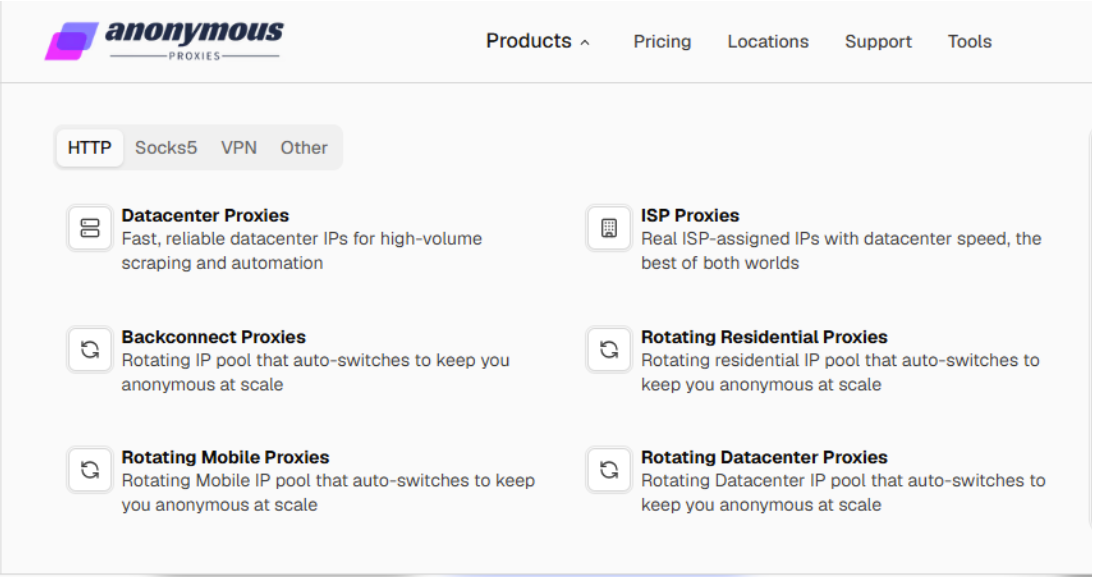
Proxy types available at Anonymous Proxies
3. Key features of Anonymous Proxies proxies
Anonymous Proxies combines a broad product range with several account-level features that make proxy selection and management relatively flexible.
-
Location selection: Users can choose IPs by subnet, city, state, or country for supported products.
-
Dual authentication: Username/password authentication and IP whitelisting are both supported.
-
Individual IP selection: Supported products allow users to choose specific IP addresses instead of relying entirely on predefined packages.
-
Instant activation: Proxies are activated after payment is processed.
-
Wide tool compatibility: Anonymous Proxies says its infrastructure integrates with more than 600 tools.
These features give users more control over how they select, authenticate, and deploy proxies across different workflows.
4. Anonymous Proxies pricing overview
Anonymous Proxies uses different pricing models depending on the proxy product. Some services are priced per IP, while rotating and traffic-based products use bandwidth-based pricing. Volume and billing-period discounts are also available on selected products. Below are the prices of some packages for your reference:
|
Proxy type |
Starting price |
|
Datacenter |
From $1.11 /IP |
|
Rotating residential |
From $3.40 /GB |
|
Socks5 |
From $1.11 /IP |
|
Trojan |
From $1.51 /IP |
Prices can vary according to quantity, billing period, location, and product configuration, so the provider's calculator should be used to confirm the final cost.
Selected proxy products also offer a free trial, allowing users to test the service before committing to a larger purchase.
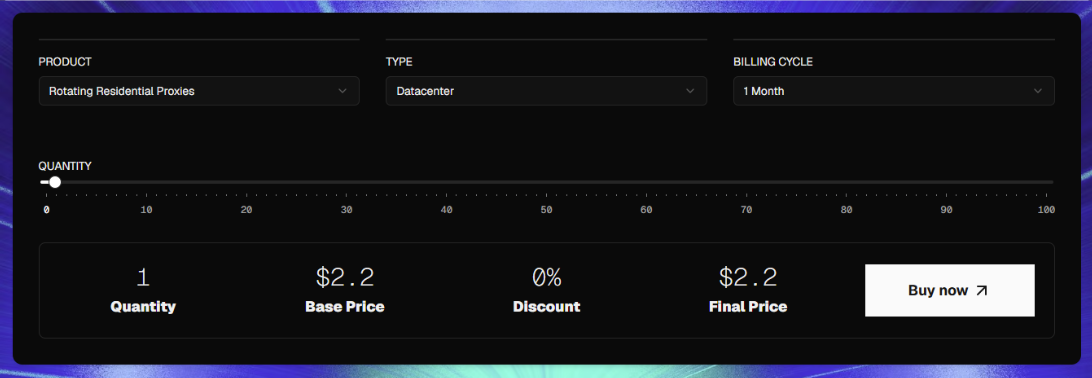
Prices for rotating residential proxies plan at Anonymous Proxies
5. Performance test
To evaluate Anonymous Proxies beyond its advertised features and pricing, IPFighter will test a proxy from the provider under real-world conditions. The test will focus on IP quality, geolocation accuracy, connection speed, and overall usability. We tested some IP addresses taken from the rotating residential and rotating mobile package using IPFighter, speed tests, and Google Search.
5.1. Preparation
Before evaluating the proxy, we first added it to our browser using the IPFighter Proxy Manager extension. This extension makes it easy to import, manage, and switch between multiple proxies directly within your browser, eliminating the need for manual proxy configuration.
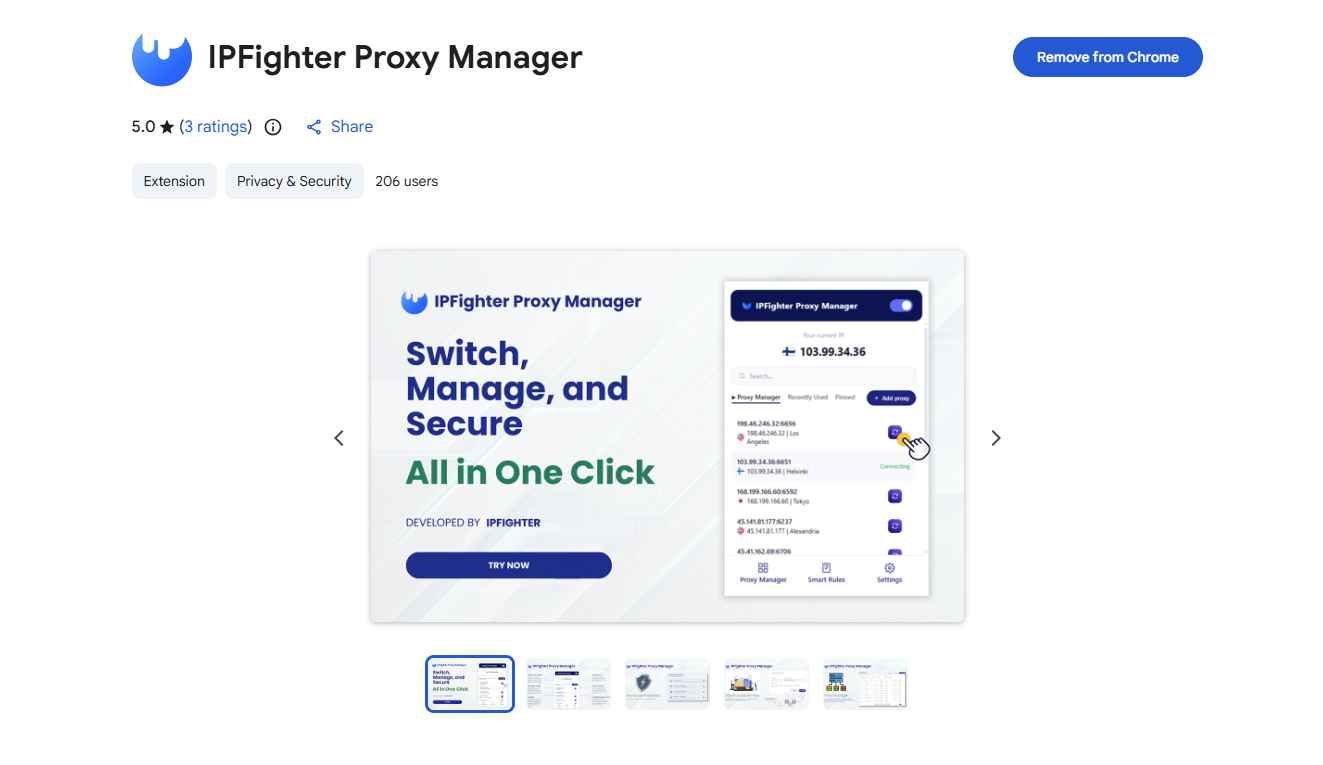
IPFighter Proxy Manager extension on Chrome
If you'd like to learn how to set it up, check out our detailed guide: A complete guide to the IPFighter Proxy Manager extension.
5.2. Test results
To evaluate the Anonymous Proxies network from various perspectives, we tested multiple rotating residential & mobile IPs across different countries. Each IP was checked in three areas: IP quality on IPFighter, connection speed via speed tests, and location consistency through Google Search.
|
Proxy location |
IPFighter |
Speed test |
Google Search |
Overall assessment |
|
|
IP 1 - Rotating residential |
United States |
Score: 90% Proxy: Not detected Blacklist: Clean Detects location: Pennsylvania, US |
Download: 16 Mbps Upload: 38 Mbps Ping: 467.5 ms |
Detected: Sedgwick County, Kansas Target: US |
Clean, high-trust IP with strong upload speed and accurate US targeting. Download speed is moderate and latency remains high, which is typical for rotating residential proxies. |
|
IP 2 - Rotating residential |
United Kingdom |
Score: 90% Proxy: Not detected Blacklist: Clean Detects location: England |
Download: 4.64 Mbps Upload: 7.68 Mbps Ping: 481 ms |
Detected: Stanford, London Target: United Kingdom |
High-quality, clean IP with consistent country-level location, though relatively low speeds and high latency may limit performance-sensitive use cases. |
|
IP 3 - Rotating residential |
Germany |
Score: 90% Proxy: Not detected Blacklist: Clean Detects location: Land Berlin |
Download: 16.24 Mbps Upload: 15.52 Mbps Ping: 620 ms |
Detected: Berlin Target: Germany |
High-quality, clean IP with solid speeds and consistent country-level location, but latency is relatively high. |
|
IP 4 - Rotating mobile |
Korea |
Score: 85% Proxy: Not detected Blacklist: Clean Detects location: Gyeongsangbuk-do DNS leaks |
Download: 4.8 Mbps Upload: 34 Mbps Ping: 678 ms |
Detected: Seoul-teukbyeolsi Target: Korea |
Clean mobile IP with strong upload speed and country-level location consistency, although low download speed, high latency, and DNS leaks are notable drawbacks. |
|
IP 5 - Rotating mobile |
Brazil |
Score: 90% Proxy: Not detected Blacklist: Clean Detects location: São Paulo |
Download: 96.21 Mbps Upload: 15.56 Mbps Ping: 485 ms |
Detected: São Paulo, Brazil Target: Brazil |
Clean, high-quality mobile IP with excellent download speed and consistent country-level location, although latency is very high. |
|
IP 6 - Rotating mobile |
United Kingdom |
Score: 90% Proxy: Not detected Blacklist: Clean Detects location: England |
Download: 94 Mbps Upload: 17 Mbps Ping: 312ms |
Detected: England Target: United Kingdom |
High-quality, clean mobile IP with excellent download speed, consistent location, and the lowest latency among the tested IPs. |
The test results show generally clean IP profiles across both rotating residential and mobile proxies, with no proxy detection and clean blacklist status on all tested addresses. Location consistency was also reasonable at the country level, although connection performance varied noticeably between individual IPs. Latency was relatively high across most tests, while the UK mobile IP delivered a stronger combination of speed and responsiveness.
One point to consider during testing was the frequency of CAPTCHA challenges. Some requests required solving the CAPTCHA around three to four times before proceeding, which may add friction to automation or repeated browsing workflows. Below is a screenshot showing the test results for a US IP address from the Anonymous Proxies rotating residential proxy package.
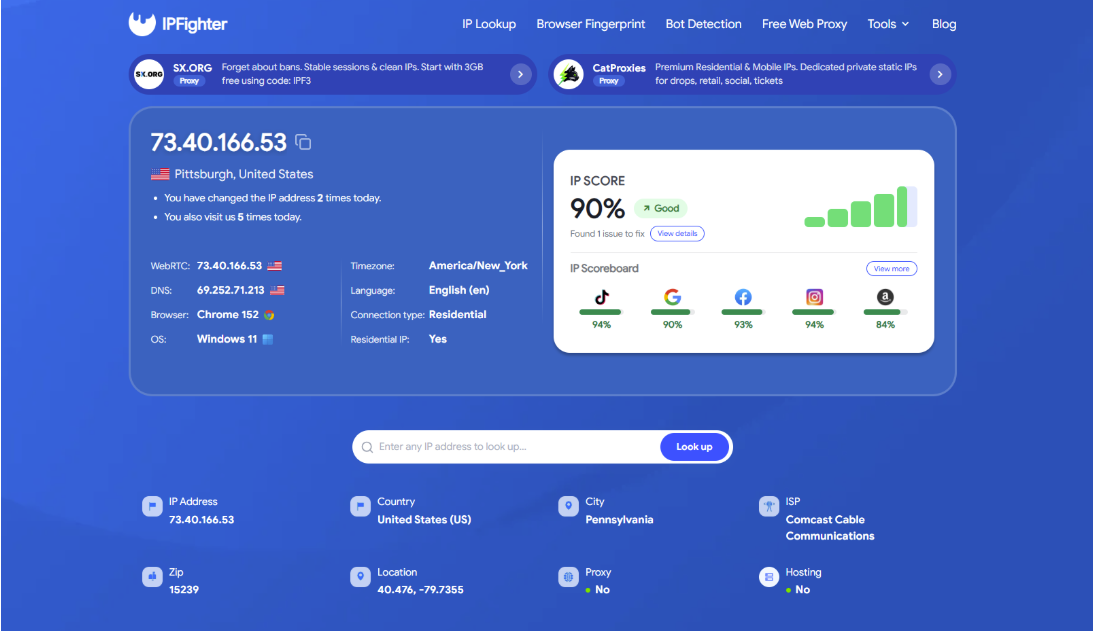
US rotating residential IP test results
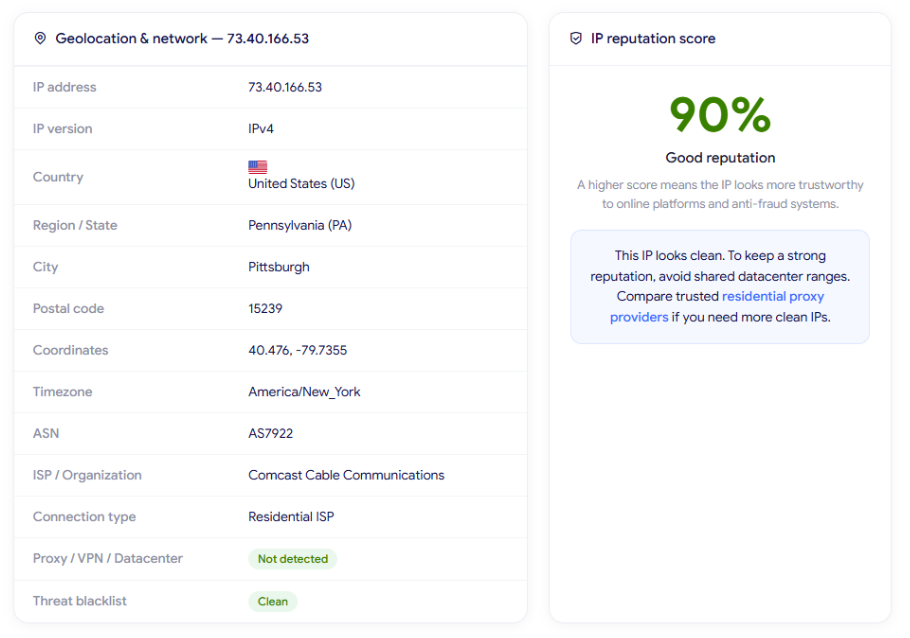
IP Lookup results on IPFighter
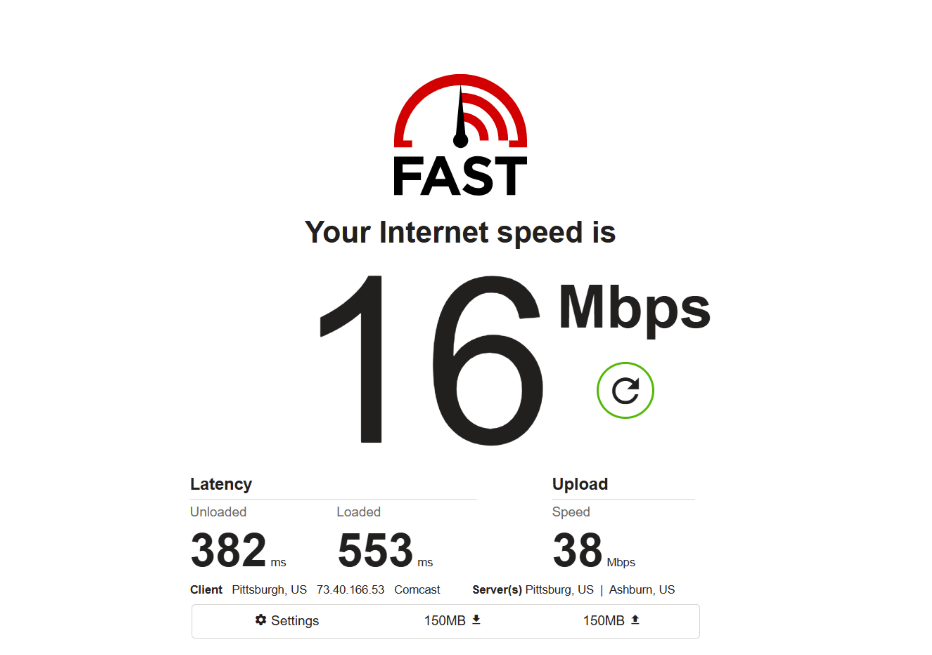
Check proxy on Speedtest
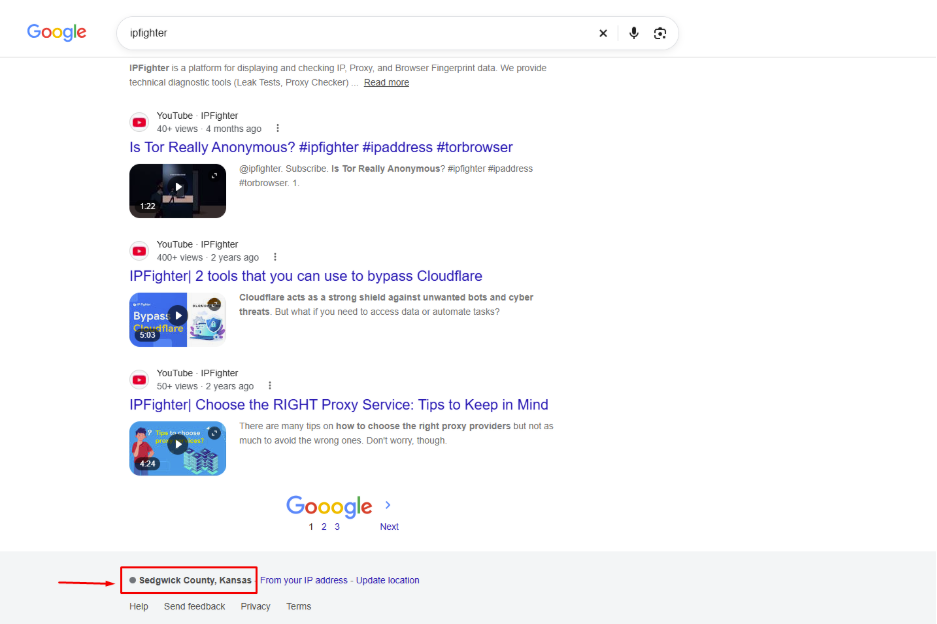
Check on the Google search bar
Read more:
-
How to improve IP score: A complete guide
-
How to pass bot detection test and avoid getting flagged
-
Explaining how to know if you have a DNS leak
6. How to get proxy from Anonymous Proxies
Getting started with Anonymous Proxies is relatively straightforward: create an account, choose a proxy plan, configure the required targeting and session settings, and generate the proxy credentials.
Step 1. Create or log in to your account
Visit the Anonymous Proxies website, sign up or log in with your email address and password. After successful login, you can access the dashboard and purchase a proxy plan.
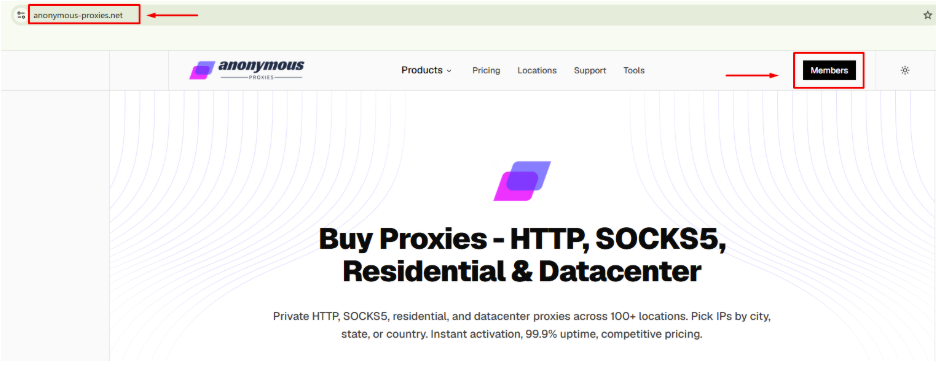
Create or log in to your account
Step 2. Purchase a proxy plan
After successfully logging into the Anonymous Proxies dashboard, you can select and purchase a proxy package that suits your needs.
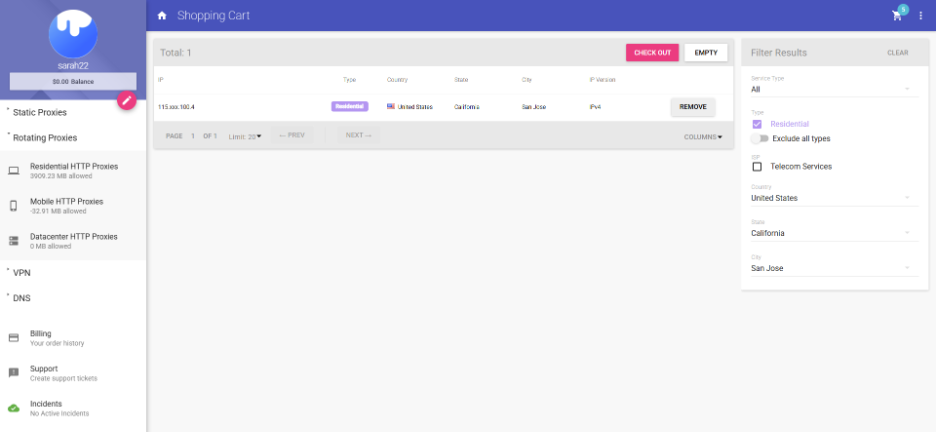
Purchase a proxy plan
Step 3. Configure your proxy
After the package is active, open the relevant proxy section in the dashboard and configure the connection settings. Depending on the proxy type, you may be able to choose: Country, state, city, session type.
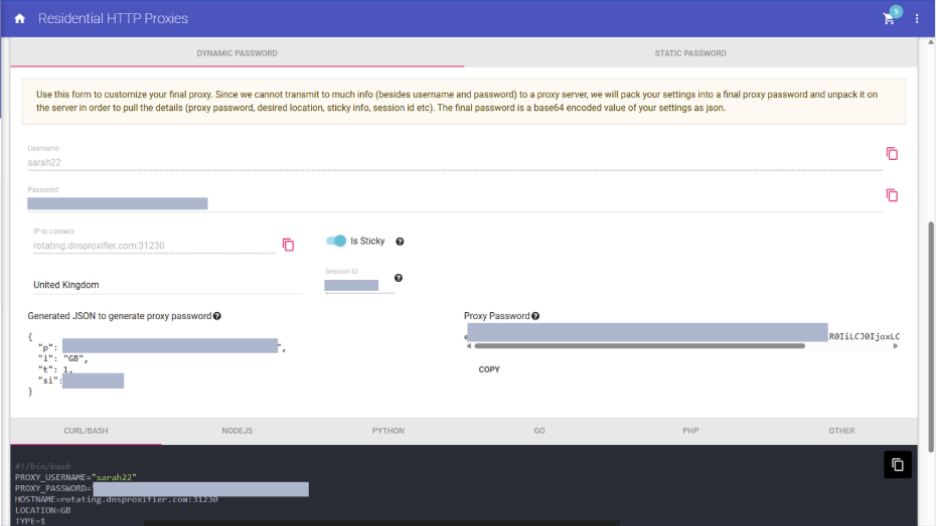
Configure your proxy
Step 4. Generate and copy your proxy
Once configuration is complete, copy the generated proxy credentials and enter them into your browser, scraping tool, automation software, or custom application.
7. Alternatives
Besides Anonymous Proxies, you can also consider other providers offering similar residential proxy services.
-
ProxyEmpire: Offers residential, mobile, ISP, and datacenter proxies, making it an option for users looking for several proxy categories within one provider.
-
NodeMaven: Provides residential, mobile, and ISP proxies, giving users flexibility across location-based scraping, automation, and other data-oriented workflows.
-
NiuProxy: Provides residential, mobile, ISP, and datacenter proxies with broad geographic coverage and flexible session options.
You can also check out reviews of our other partners here:
-
Rapidproxy review: A closer look at its residential proxy network
-
Coronium review: How do its dedicated 4G/5G proxies perform?
-
Proxy001 review: Exploring its 100M+ residential proxy network
-
Mobileproxy.space review: Is its mobile proxy quality really good
8. Conclusion
Anonymous Proxies stands out for its broad range of proxy options, covering HTTP, SOCKS5, and specialized services such as Shadowsocks, Trojan, and Smart DNS. Its flexible authentication, wide location coverage, and different proxy models make it suitable for workflows with varying requirements around IP stability, rotation, and traffic routing. Our checks also showed generally usable IP quality, although speed, latency, and connection behavior can vary depending on the individual proxy.
These results represent only a sample of IPs tested at a specific point in time, so performance may change with different IPs, locations, targets, or testing conditions. If you want to check the quality, reputation, and connection details of your own proxy, you can use IPFighter to run an IP check and see how the address performs.
9. FAQ
Does Anonymous Proxies offer both static and rotating proxies?
Yes. Its catalog includes static datacenter and ISP proxies alongside rotating residential, mobile, datacenter, and backconnect options. This allows users to choose between persistent IPs and automated rotation.
Can I choose a specific IP address?
Yes. For supported products, Anonymous Proxies allows users to select individual IPs by subnet, city, state, or country instead of purchasing only predefined IP packages.
Does Anonymous Proxies support SOCKS5 authentication?
Yes. SOCKS5 products support dual authentication, including username/password and IP-based authentication.
What is the difference between SOCKS5 and Shadowsocks?
SOCKS5 is a general-purpose proxy protocol suitable for applications such as browsers, games, SSH, and bots. Shadowsocks adds encrypted tunneling and is designed for situations where traffic inspection or filtering is a concern.
Does Anonymous Proxies offer Smart DNS?
Yes. Its Smart DNS service reroutes DNS queries through the provider's DNS servers to help access geo-restricted content without routing all traffic through an encrypted VPN tunnel.
Read more
Anonymous Proxies review: What its proxy network offers


Web scraping proxy: How to collect web data more efficiently

Can a gaming proxy improve your gaming experience? What to know

Proxy server for streaming: Can it improve your experience?
Rapidproxy review: A closer look at its residential proxy network

Coronium review: How do its dedicated 4G/5G proxies perform?