

A proxy for trading routes your connection through an intermediary server before it reaches a trading platform. It can change the IP address and network route visible to the platform, but it does not automatically make trading faster or more secure.
In this guide, IPFighter explains how trading proxies work, what they can be used for, which proxy types may fit different needs, and what to consider before using one.
1. What is a proxy for trading?
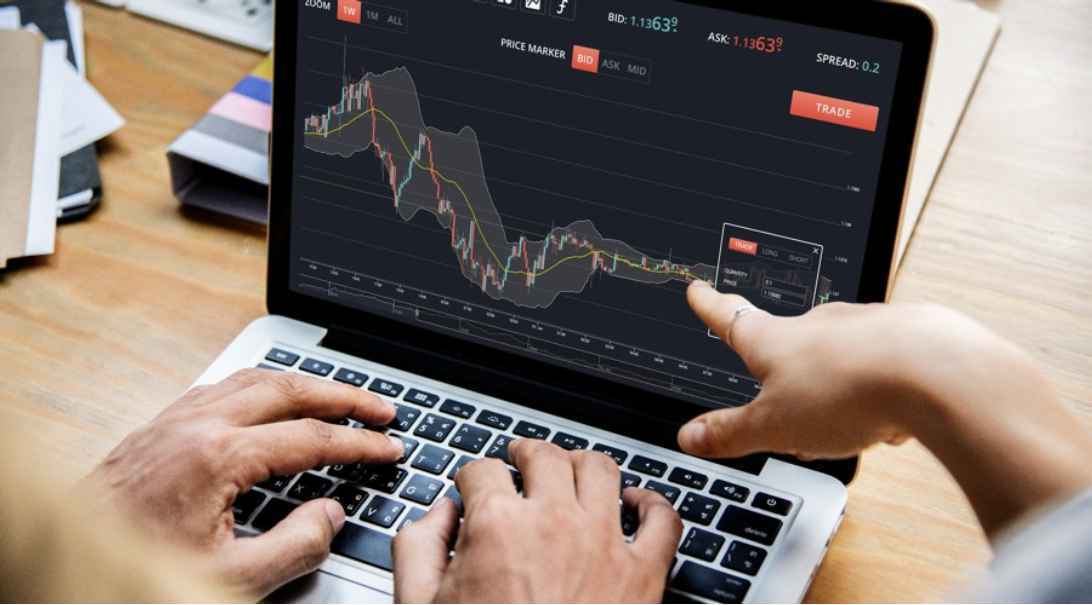
A proxy for trading is an intermediary server between your device or trading application and an online trading platform. Instead of connecting directly, your traffic is routed through the proxy, which presents its own IP address to the destination.
A trading proxy is not a separate technical proxy category. The right option depends on factors such as IP consistency, location, latency, security, and compatibility with the platform. For a broader introduction, see our guide on what is a proxy.
Definition of proxy for trading
Discover more:
-
Web scraping proxy: How to collect web data more efficiently
-
Can a gaming proxy improve your gaming experience? What to know
-
Proxy server for streaming: Can it improve your experience?
2. How does a proxy for trading work?
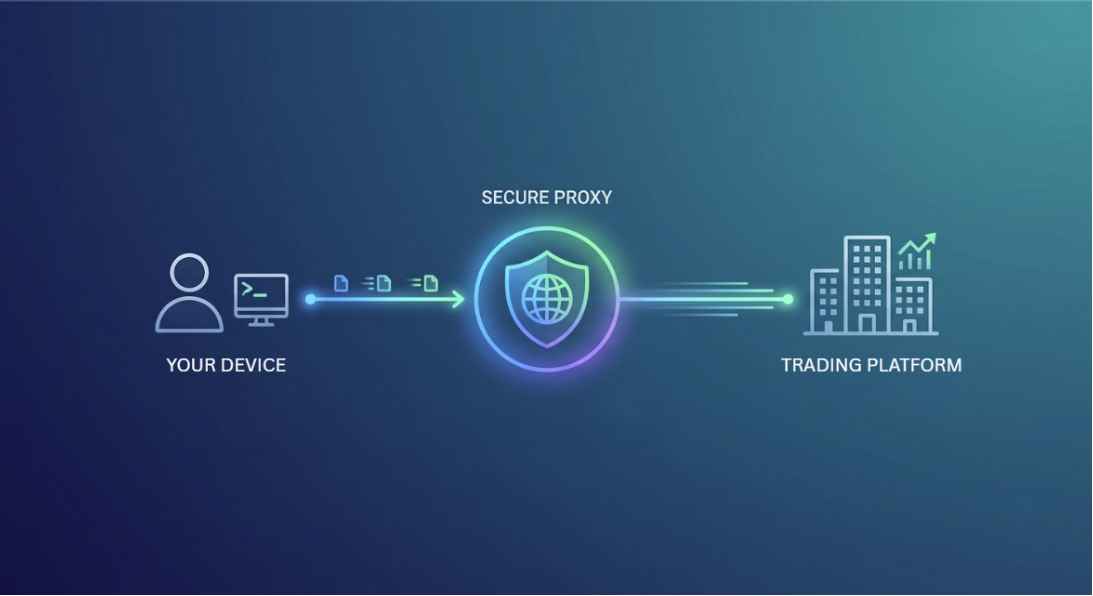
A proxy sits between your device and the trading platform, forwarding requests and returning responses through its own network connection.
The basic flow is: Your device → Proxy → Trading platform
The platform may see the proxy's IP instead of your original public IP. However, the additional network hop can also introduce latency, so using a proxy does not automatically make a trading connection faster.
Proxy for trading works
3. Trading proxy vs. VPN: Which is better for financial trading?
Traders often evaluate both proxies and VPNs when looking for privacy or regional access, but they operate differently at the technical level:
-
Trading proxy: Working at the application layer (SOCKS5, HTTP/HTTPS), a proxy routes traffic specifically for a designated trading application, terminal, or browser tab. Because it does not encrypt system-wide traffic, it typically yields lower protocol overhead and faster data execution—making it ideal for WebTrader interfaces or API-based algorithmic trading scripts.
-
Virtual Private Network (VPN): A VPN encrypts all network traffic at the system level. While offering comprehensive privacy across public Wi-Fi networks, heavy encryption protocols (like OpenVPN) can introduce packet overhead and increased latency, which may negatively impact high-frequency or real-time forex and crypto trading.
If your workflow requires surgical IP routing for a specific trading app with minimal execution lag, a dedicated trading proxy is generally preferred over a VPN.
4. What can a proxy for trading be used for?
A trading proxy can support several networking and testing use cases, depending on what the broker or platform permits.
-
IP and location management: Use a different IP when testing how a platform responds to a particular location.
-
Platform testing: Check websites, dashboards, or services from different network locations.
-
Separate connections: Assign different IPs to separate, permitted workflows.
-
Automation environments: Support automated trading tools when automation and proxy use are allowed by the platform.
-
Access consistency: Maintain a stable IP when a workflow benefits from consistent connections.
These use cases do not mean every broker supports proxy connections or location changes. Always check the platform's rules before using a proxy.
These use cases make proxies more relevant to trading workflows that require IP or location management rather than higher trading performance. For actual order execution, however, the trading platform, broker infrastructure, internet connection, and network route remain important factors.
5. Can a proxy for trading improve speed or latency?
A proxy does not guarantee lower latency or faster trading. Because it adds another network hop, a poorly located or overloaded proxy can increase the time required for requests and responses.
In some cases, a proxy may provide a more efficient route than your default connection, but the result depends on network distance, routing, server load, and connection quality. For trading, predictable connectivity and stability can be more important than raw download speed.
-
Latency: The time required for data to travel between endpoints and return.
-
Stability: How consistently the connection performs without interruptions or unexpected changes.
A proxy is best used to secure stable connections and bypass location restrictions, not as a guaranteed tool for reducing latency.
6. Which proxy type is best for trading?
There is no single proxy type that fits every trading setup. The right choice depends on whether you need a consistent IP, specific location, high bandwidth, or another networking characteristic.
|
Proxy type |
IP consistency |
Typical considerations |
|
Static ISP Proxy (Dedicated) |
High |
Combines datacenter speed with a legitimate residential ISP identity. Ideal for professional traders needing low latency, static IPs, and high trust scores to avoid triggering broker security flags. |
|
Static residential |
High |
Stable IP and residential-associated identity; typically higher cost |
|
Rotating residential |
Low |
Useful for location testing or workflows that require IP rotation |
|
Mobile |
Variable |
Mobile-network IPs and broad geographic availability; usually more expensive |
|
Datacenter |
High |
Fast and scalable, but datacenter IPs may be more easily identified |
For most trading workflows - whether in crypto, forex, or stock markets—Static ISP Proxies or Static Residential Proxies are the top choice. They provide a clean, dedicated IP address with sticky session support, minimizing the risk of security friction or mid-session disconnects.
7. How do you choose a proxy for trading?
Start with the requirements of your trading platform rather than choosing a proxy based only on price or the number of available IPs.
-
Need a consistent IP → Static ISP or Static Residential proxies are most suitable.
-
Need high speed and stability → Dedicated ISP proxies offer high bandwidth alongside clean residential reputations.
-
Need specific geographic coverage → Choose a residential or ISP proxy with the required location.
-
Need IP rotation → Rotating proxies may work for testing or permitted workflows, but they may not suit sessions that require IP consistency.
-
Need multi-account management → If running multiple permitted trading profiles, pair your proxies with an antidetect browser to maintain separate browser fingerprints.
Another factor to consider is how long the same IP needs to remain active. Trading platforms may ask for additional verification when login locations or network characteristics change frequently. A stable proxy can therefore be more practical for workflows that require repeated access from the same environment, while rotating proxies may be more suitable for testing different locations or connections.
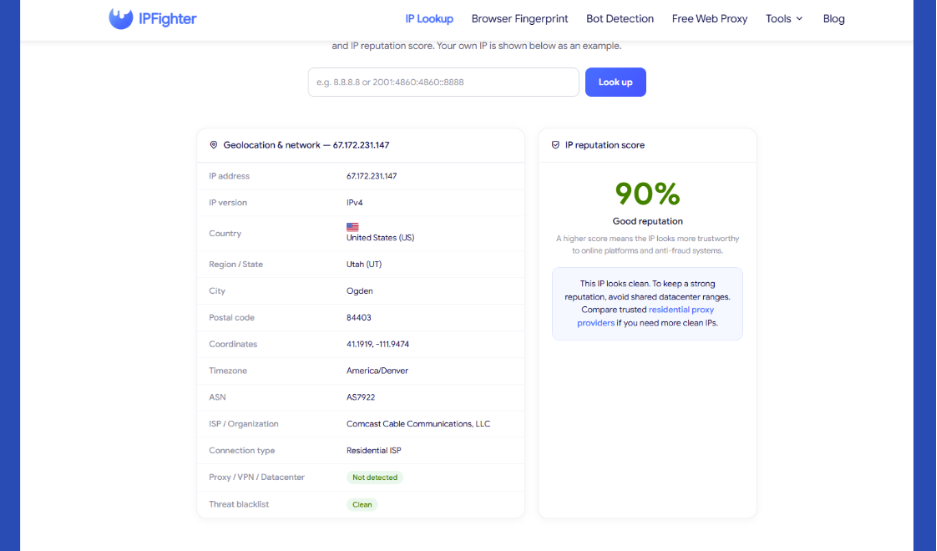
When comparing best proxy providers for online trading, look beyond the size of the IP pool. Consider factors such as IP consistency, latency, uptime, location coverage, authentication methods, security practices, and compatibility with your trading platform. IPFighter can help you check IP information, location, proxy status, and available network signals before using a proxy.
Quickly check proxies with IPfighter
8. What are the risks of using a proxy for trading?
A proxy can introduce additional technical, security, and account-related considerations, especially when it is used with a sensitive financial account.
-
Security risk: Your traffic passes through another network, so the provider's reliability and security practices matter.
-
Account verification: Changes in IP or location may trigger additional security checks.
-
Connection instability: Proxy downtime or poor routing can interrupt access to a trading platform.
-
Latency: An inefficient route can add delay to requests and responses.
-
IP reputation: An IP with a poor history may receive additional scrutiny from a platform.
-
Privacy concerns: Trading accounts can involve sensitive personal and financial information, making provider trust particularly important.
These risks do not mean that every proxy is unsuitable for trading, but they show why proxy quality matters more when the connection is used to access financial accounts or trading platforms. A proxy should be treated as part of the network environment, not as a security layer by itself.
9. How can you use a proxy for trading more safely?
Using a proxy safely starts with choosing a provider and configuration that do not introduce unnecessary security or reliability risks.
-
Use a reputable provider: Check its security practices, infrastructure, and service history.
-
Use encrypted connections: Prefer HTTPS or other encrypted protocols where supported by the platform.
-
Avoid free or untrusted proxies: Unknown providers may offer inconsistent performance or unclear privacy practices.
-
Keep IPs consistent when needed: Avoid unnecessary IP changes during trading sessions.
-
Check platform rules: Confirm that proxy, VPN, automation, and location changes are permitted.
-
Test before trading: Check latency, stability, and IP information before relying on the proxy.
-
Protect your credentials: Never share trading passwords or MFA codes with a proxy provider.
These steps can reduce common connection and security issues, but they cannot replace the security controls provided by your broker or trading platform. Always follow the platform's authentication requirements and use additional protections such as strong passwords and multi-factor authentication where available.

How to use a proxy for safer trading
Read more:
-
How to use web proxy safely: A practical guide
-
How to check if a proxy is working and read your results
-
1TamilMV proxy: How it works and what to know before using one
10. Conclusion
A proxy for trading primarily changes the IP address and network route used to reach a trading platform. It can be useful for location testing, maintaining a consistent IP, or supporting other permitted workflows, but it does not guarantee lower latency or better trading performance.
When choosing a proxy, prioritize security, stability, consistent IPs, low latency, and platform compatibility over IP pool size alone. Before using one with a trading platform, check its IP and network characteristics with IPFighter's IP Lookup.
11. FAQ
Can I buy a proxy for trading?
Yes. Commercial proxy providers offer different proxy types, locations, IP pools, and bandwidth options. When choosing one, consider security, stability, IP consistency, and platform compatibility rather than price alone.
Is using a proxy legal?
Using a proxy is generally a networking activity, but applicable laws and platform rules depend on your location and how the proxy is used. A broker may also restrict proxy, VPN, automation, or location-masking activities in its Terms of Service.
Can a proxy hide my IP when trading online?
Yes. A proxy can present its own IP address to the destination instead of your original public IP. However, it does not make your account completely anonymous because platforms can use account, device, and other signals for identification.
Can I use a free proxy for online trading?
Free proxies may be available, but their ownership, reliability, security, and IP reputation can be difficult to verify. For sensitive trading activity, a provider with clear security practices and stable infrastructure is generally easier to evaluate.
Should I use a rotating proxy for trading?
A rotating proxy may be useful for certain testing or location-based workflows, but frequent IP changes can be unsuitable for trading sessions that benefit from consistency. Check the platform's rules and requirements before using one.
Read more

Proxy for trading: Can it improve your connection and privacy?


Anonymous Proxies review: What its proxy network offers

Web scraping proxy: How to collect web data more efficiently

Can a gaming proxy improve your gaming experience? What to know

Proxy server for streaming: Can it improve your experience?

Rapidproxy review: A closer look at its residential proxy network