

While both datacenter and residential proxies can hide your real IP address, they operate very differently and are designed for different use cases. So what exactly is the difference between datacenter and residential proxies? Which option offers better performance, lower detection rates, and better value for your budget?
In this guide, IPFighter compares both proxy types to help you choose the right solution for your specific needs.
1. The difference between a datacenter proxy and a residential proxies: 7 key points
While both datacenter and residential proxies can hide your real IP address, they differ in several important areas. Understanding these differences can help you choose the right proxy type for your budget, performance requirements, and risk tolerance.
1.1. Source & nature of the IP address
Datacenter proxies use IP addresses generated by cloud providers and hosting companies such as AWS, Google Cloud, or DigitalOcean. These IPs are created inside data centers and are not linked to any real internet subscriber.
Residential proxies use IP addresses assigned by Internet Service Providers (ISPs) to real households and devices. Worth noting, ISPs may assign some IPs to their own data centers, creating residential proxies within business-owned devices, also known as ISP proxies. If you're weighing which suits your use case, anyIP breaks down the distinction between ISP and residential IPs in detail.
Because residential IPs originate from real users, they generally appear much more legitimate to websites than datacenter IPs.
1.2. Trust level and detection risk
Datacenter proxies are easy for websites to identify because large hosting providers own predictable IP ranges. Many anti-bot systems already maintain databases of known datacenter networks and can flag or challenge these connections more aggressively.
Residential proxies typically blend in with normal internet traffic because they use ISP-issued addresses. As a result, they are less likely to trigger security systems, CAPTCHAs, or automated fraud detection mechanisms.
1.3. Connection speed and performance
Datacenter infrastructure is built on enterprise-grade hardware and high-bandwidth network connections. This allows datacenter proxies to deliver extremely fast speeds, low latency, and stable uptime.
Residential proxies rely on real consumer internet connections. Performance can vary depending on the quality of the underlying household network, geographic location, and ISP infrastructure.
For bandwidth-intensive tasks or large-scale automation, datacenter proxies often provide better performance consistency.
1.4. Bandwidth policy and data usage
Most datacenter proxy providers offer unlimited traffic or very generous bandwidth allowances. This makes them attractive for projects that generate large amounts of data transfer.
Residential proxies are commonly billed based on data consumption. Users typically pay per gigabyte of traffic, which can become expensive for large-scale operations.
1.5. Geo-targeting capabilities
Many datacenter proxy networks only allow users to select a country or broad region. City-level targeting may be limited or unavailable.
Residential proxy providers like IPFly proxy, Nodemaven, Catproxies, Floppydata, etc. often allow users to target specific countries, states, cities, and sometimes even individual ISP networks. This level of granularity is valuable for localized SEO research, ad verification, and region-specific testing.
1.6. Block rate and long-term reliability
Because datacenter IP ranges are widely known, websites can block large groups of datacenter proxies with a single filtering rule. This increases the likelihood of encountering CAPTCHAs, rate limits, and access restrictions.
Residential proxies generally experience lower block rates because their traffic resembles normal user behavior. Since these IPs belong to real ISP customers, websites often treat them as legitimate visitors.
While no proxy type is completely immune to detection, residential proxies typically maintain access longer in environments with strict anti-bot protections.
1.7. Cost and return on investment
Datacenter proxies are usually much cheaper because providers can generate and manage large numbers of IP addresses within their own infrastructure. Users can often purchase hundreds of IPs for the price of a small residential proxy plan.
Residential proxies require access to real ISP-issued IP addresses, making them more expensive to operate and maintain. Pricing is typically higher and often tied directly to data consumption.
For budget-conscious projects, datacenter proxies may provide better value. For tasks where trust and low detection rates are critical, the additional cost of residential proxies can often be justified.
Difference between datacenter and residential proxies
Discover more:
-
What is a Proxy? Benefits, usage, and everything you need to know about proxies
-
What is bandwidth? Why does bandwidth affect website speed?
-
Best proxy providers in 2026: Compare top 6 services
2. Key advantages and disadvantages for each type
Both datacenter and residential proxies have strengths and weaknesses. The right choice depends on your goals, budget, and tolerance for detection risk.
|
Datacenter proxies |
Residential proxies |
|
|
Advantages |
|
|
|
Disadvantages |
|
|
In short, datacenter proxies focus on speed, scalability, and affordability, while residential proxies focus on authenticity, trust, and lower detection rates. The best choice depends on your specific use case and budget.
3. Which proxy should you use?
There is no universal winner. The best choice depends on the task you need to perform.
3.1. When should you choose datacenter proxies?
Datacenter proxies are often the best option when:
-
Unprotected public data scraping: Gathering information from public blogs, local real estate directories, or news sites that do not use advanced anti-bot firewalls like Cloudflare or Akamai.
-
High-volume data transfers: Running automated software that requires streaming rich media, downloading large files, or transferring massive datasets where unmetered bandwidth is critical.
-
Basic infrastructure privacy: Creating a low-cost, high-speed security layer to mask your backend server's true location while handling high-throughput internal data pipelines.
-
Highly economical operations: Running scripts on a strict budget where keeping software costs minimal is your primary operational objective.
For many large-scale data collection projects, datacenter proxies provide the best return on investment.
Select datacenter proxies
3.2. When should you choose residential proxies?
Residential proxies are often the better option when:
-
E-Commerce and marketplace scraping: Extracting pricing, inventory, and product data from highly protected platforms like Amazon, eBay, or Google Search, where data center blocks occur almost instantly.
-
Long-term account growth: Managing and scaling sensitive, high-value assets, such as Facebook Ad Managers, TikTok monetization accounts, or Shopify stores where using a clean consumer IP is required to avoid automated profile suspension.
-
Strict anti-bot navigation: Operating retail automation tools (such as sneaker bots) or ticketing applications that use aggressive security layers to block automated checkout attempts.
These use cases benefit greatly from the natural appearance of residential traffic.
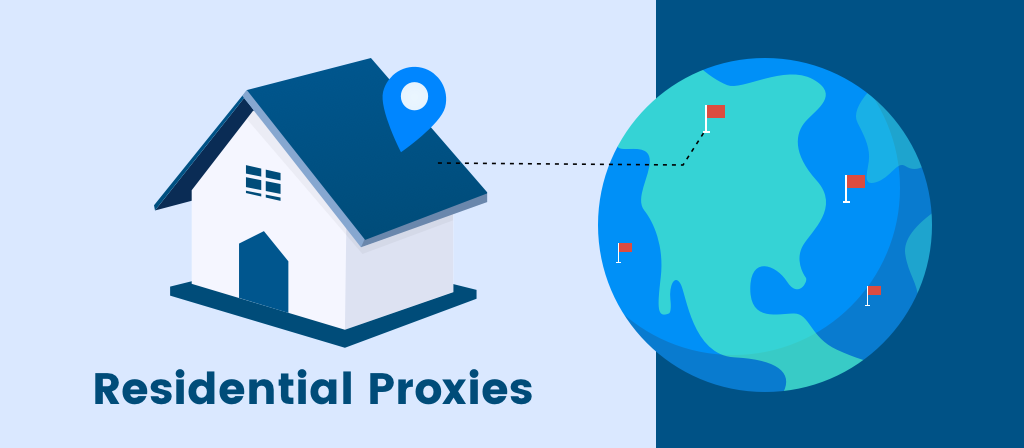
Select residential proxies
3.3. Optimize costs with a hybrid approach
Many experienced operators use both proxy types together. For example:
-
Datacenter proxies handle high-volume workloads.
-
Residential proxies handle sensitive actions.
This hybrid strategy often delivers the best balance between performance, cost, and reliability. Instead of relying entirely on one proxy type, organizations can allocate resources based on risk level and operational requirements.
4. Top recommended data center and residential proxy providers
Most proxy providers have their own strengths. Some focus on fast and affordable datacenter proxies, while others invest heavily in residential networks with better trust and lower detection rates. For users who need reliable performance across both proxy types, here are five providers worth exploring.
Another option to compare is CoProxy, ProxyWing, Evomi which offers both residential and datacenter proxies for different traffic and budget requirements.
4.1. IPRoyal
IPRoyal offers residential, datacenter, mobile, and ISP proxy solutions. The company is particularly well known for its large residential network and flexible pricing structure.
If you're interested in trying IPRoyal, you can check available IPRoyal promo codes and discounts through IPFighter.
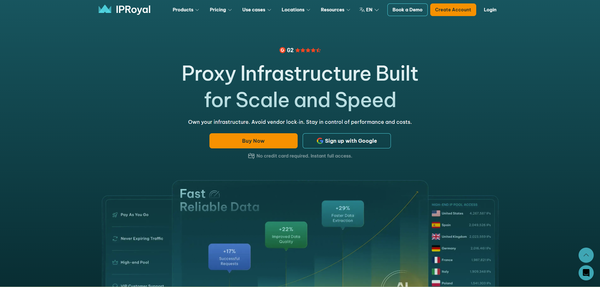
IPRoyal homepage
4.2. Decodo
Decodo (formerly Smartproxy) provides a balanced mix of residential, mobile, and datacenter proxy services. The platform is widely used for scraping, research, automation, and account management projects.

Decodo homehpae
4.3. Proxy-Seller
Proxy-Seller provides affordable datacenter, residential, ISP, and mobile proxies across numerous geographic locations. Its wide location coverage makes it a popular choice among users who require flexible geo-targeting options.
Use our exclusive Proxy-Seller promo codes on IPFighter to reduce your operational overhead on your next subscription.
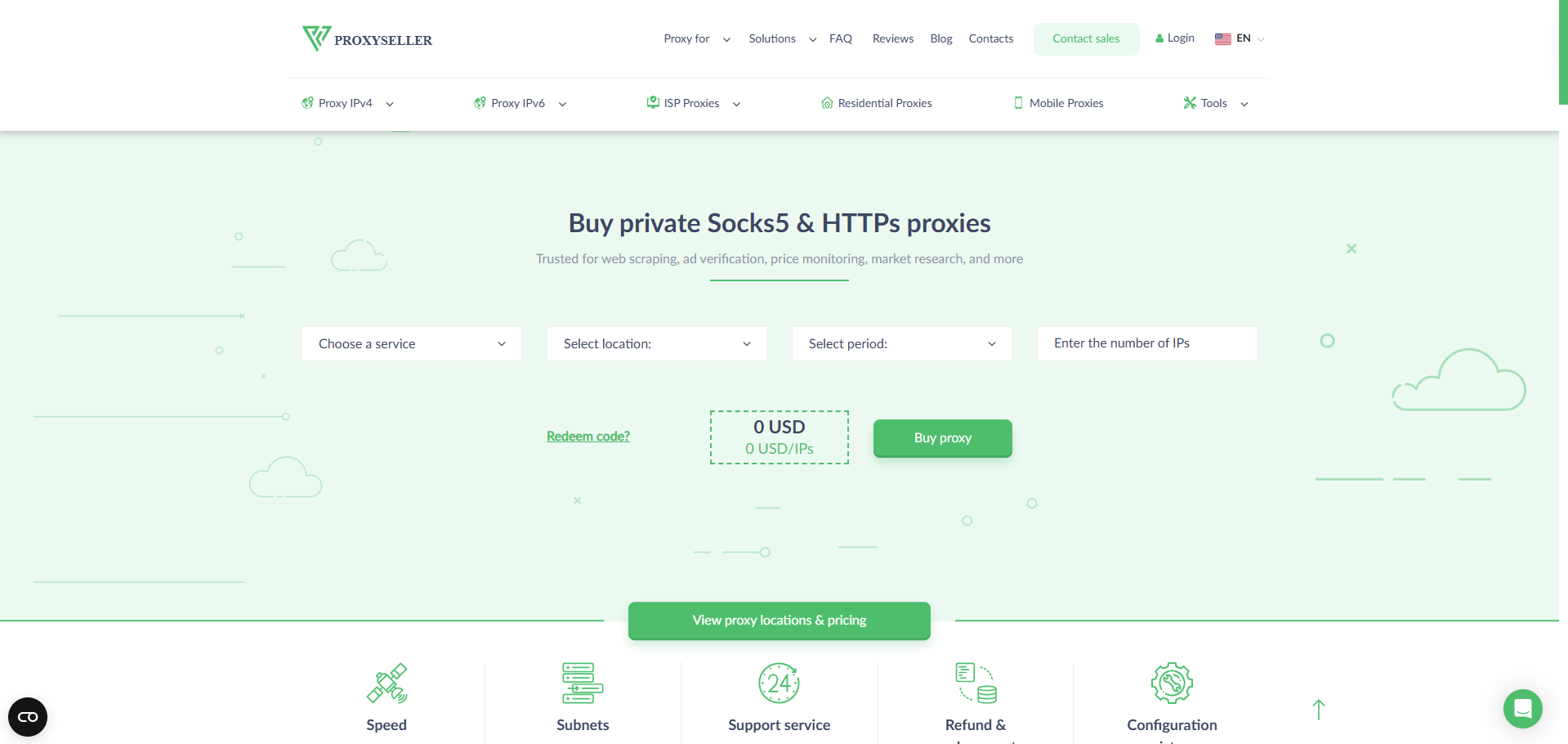
Proxy-Seller homepage
4.4. Webshare
Webshare is known for offering budget-friendly datacenter proxies and easy onboarding for beginners. Its dashboard and API integrations make deployment straightforward for both individuals and businesses.
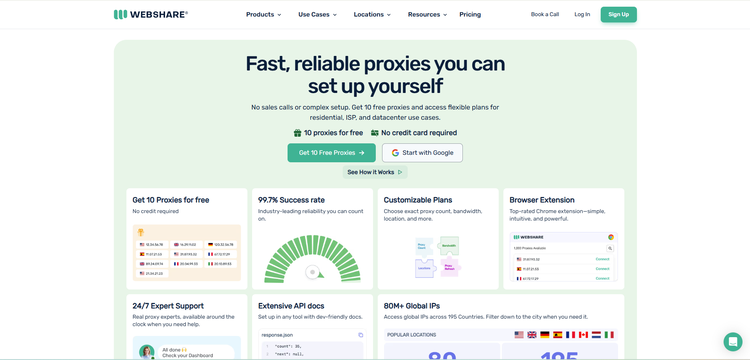
Webshare homepage
4.5. ProxyEmpire
ProxyEmpire stands out by providing long-lasting rolling data structures, ensuring your purchased residential bandwidth never expires at the end of the month. They manage millions of rotating consumer endpoints worldwide, making them highly effective for large-scale data harvesting.
Optimize your budget and unlock exclusive deals by activating ProxyEmpire promo codes from IPFighter's Coupons Partners catalog today.
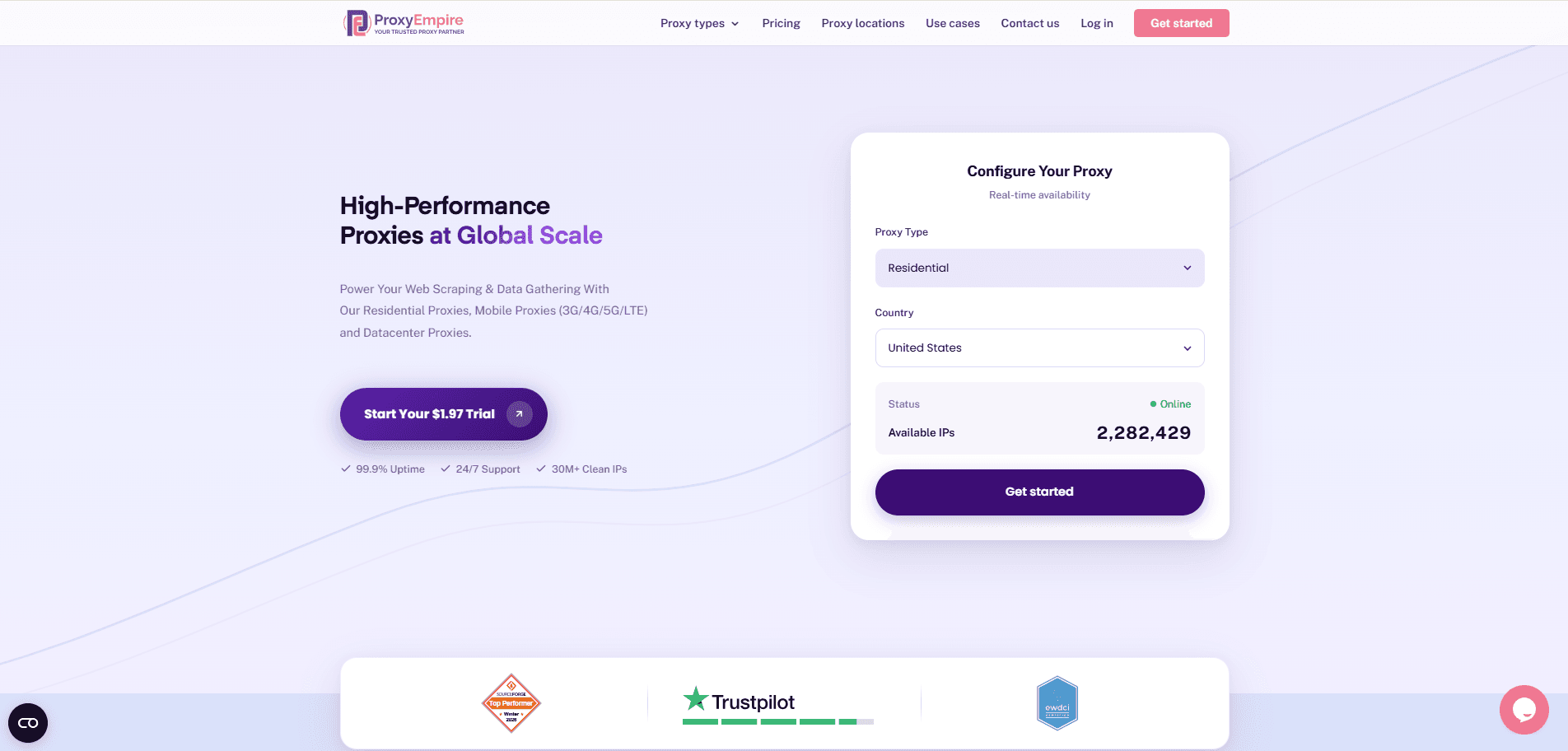
ProxyEmpire homepage
5. How to verify proxy quality before using it
Regardless of which proxy type you choose, validating proxy quality before deployment is essential. IPFighter provides several useful checks:
-
IP reputation & trust scores: Instantly see how platforms perceive the IP. This includes a breakdown of its trust level and fingerprint score to determine if it’s flagged as risky or secure.
-
Verify proxy detection status: Determine whether websites can easily identify the connection as proxy traffic.
-
Verify geolocation consistency: Confirm that the reported location matches the provider's advertised location.
-
Leak tests (DNS & WebRTC): Ensure your true identity is shielded. These tests detect if your real IP is leaking through technical vulnerabilities, which would otherwise compromise your anonymity.
Running these checks before purchasing large volumes of proxies can help prevent costly mistakes later.
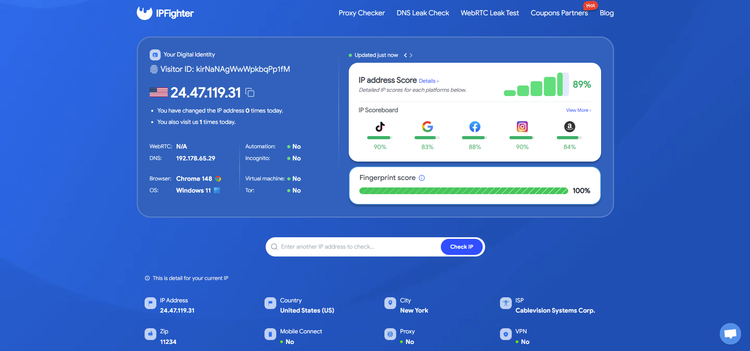
Check IP on IPFighter
Read more:
-
What is an ISP proxy? How it works and where to buy
-
Top shared proxy services for cheap and scalable proxy usage
-
Dedicated proxy providers: Best private proxy services compared
6. Conclusion
Datacenter proxies prioritize speed, scalability, and affordability, while residential proxies focus on trust, authenticity, and lower detection rates. Each proxy type offers distinct advantages and limitations depending on the project requirements. Rather than asking which proxy is universally better, the more important question is which proxy aligns best with your goals, budget, and risk tolerance. For many users, combining both proxy types often produces the most efficient results.
If you're planning to buy a data center proxy or a consumer proxy, check out the proxy promo codes in the Partner Coupons section on IPFighter to save a significant amount on your proxy purchase.
7. FAQ
What is the difference between datacenter and residential proxies?
Datacenter proxies use IPs from cloud servers, while residential proxies use ISP-issued IPs assigned to real households.
Are residential proxies better than datacenter proxies?
Not necessarily. Residential proxies offer lower detection rates, while datacenter proxies provide better speed and lower costs.
Why are residential proxies more expensive?
Residential IPs are harder to acquire and maintain, and many providers charge based on data usage.
Are datacenter proxies easier to detect?
Yes. Websites can often identify datacenter IP ranges associated with cloud providers and hosting companies.
Which proxy type is best for web scraping?
It depends on the target website. Public sites may work well with datacenter proxies, while heavily protected sites often require residential proxies.
Which proxy type is best for social media accounts?
Residential proxies are generally preferred because they resemble normal user traffic more closely.
Can I use both proxy types together?
Yes. Many organizations use datacenter proxies for large-scale tasks and residential proxies for sensitive operations that require higher trust levels.
Read more

IPFoxy review: Are its pure rotating residential proxies worth it?


CatProxies review: What do its five proxy types offer?

Whitecloakproxy review: What to know before you buy

Geonix review: What makes its proxy services stand out?

ProxyWing review: Pricing, features, and real-world performance
Floppydata review: A closer look at its proxy network