

Are you wondering what residential proxies are, how they work, and why they are often considered more reliable than other types of proxies? In this guide, IPFighter will explain everything you need to know about residential proxies, their advantages, common use cases, and how to assess their quality before deployment.
1. What is a residential proxy?
A residential proxy is a type of proxy service that routes your internet traffic through IP addresses assigned by Internet Service Providers (ISPs) to real homes and real devices. Some key characteristics of residential proxies include:
-
IP addresses are issued by real ISPs to households and residential devices.
-
Requests appear to come from genuine home internet connections.
-
Traffic blends in more naturally with regular user activity.
-
Residential IPs are generally harder for websites to identify as proxy traffic.
-
They can be offered as rotating or static residential connections depending on the use case.
When a user sends a request through a residential proxy, the request is routed through a residential IP before reaching the destination website. As a result, the website sees the residential IP address instead of the user's real IP address.
Because of these characteristics, residential proxies are commonly used for market research, web scraping, ad verification, account management, and other tasks that require a more authentic online identity.
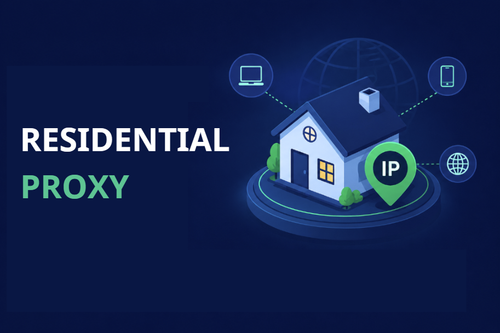
A residential proxy is a type of proxy service that uses IP addresses assigned by ISPs
Discover more:
-
What is a Proxy? Benefits, usage, and everything you need to know about proxies
-
What is bandwidth? Why does bandwidth affect website speed?
2. Why do websites trust residential proxies more than other proxies?
Residential proxies have become one of the most popular proxy solutions because they offer several unique advantages.
2.1. Higher trust levels
Since residential IPs belong to real internet users, websites often view them as legitimate visitors rather than suspicious traffic sources.
2.2. Lower detection rates
Modern anti-bot systems actively monitor IP reputation, network ownership, and behavioral patterns. Residential IPs generally blend into normal user traffic more effectively than datacenter IPs.
2.3. Better geo-targeting
Most providers offer precise geographic targeting, including country-level targeting, state-level targeting and city-level targeting. This is especially useful for localized research and content verification.
Because of these advantages, residential proxies are often considered one of the safest proxy types for long-term web operations.
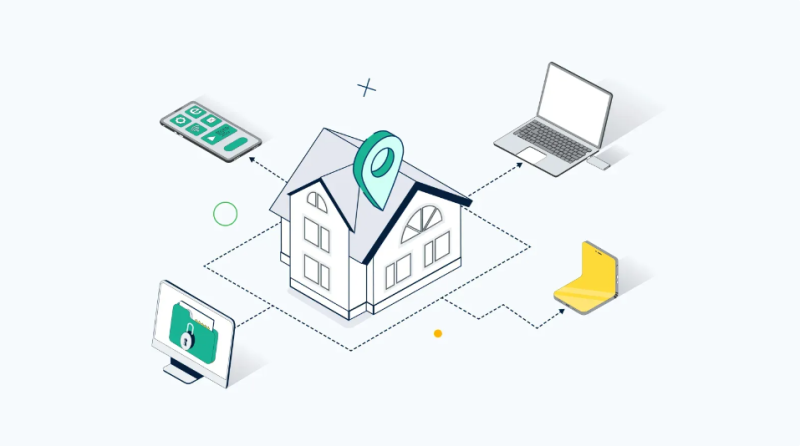
Residential proxy has many benefits
3. What is the difference between a residential proxy and an ISP proxy?
Both residential proxies and ISP proxies are known for their high trust levels, but they are not the same technology. The table below highlights the key differences between these two popular proxy types.
|
Feature |
Residential proxy |
ISP Proxy |
|
IP source |
Sourced directly from local ISPs (e.g., AT&T, Comcast, etc.) servicing residential homes. |
Leased directly from ISPs but hosted on enterprise data center server stacks. |
|
Trust level |
Very high. Appears similar to legitimate human browsing activity in most situations. |
High. Retains a clean ISP signature on major IP database registries. |
|
Detection risk |
Exceptionally low; rarely triggers automated security blocks or multi-stage CAPTCHAs. |
Low, though making too many rapid requests from a single static IP can trigger rate limits. |
|
Speed & Uptime |
Bound to the local home user's bandwidth limits (Variable performance). |
Very fast. Operates on dedicated high-speed data center backbone pipes. |
|
Cost |
Premium pricing, usually metered and billed per gigabyte (GB) of data used. |
Flat-rate per-IP billing, often with unmetered bandwidth options. |
4. Types of residential proxies
Residential proxies can be categorized in several ways.
4.1. Based on IP rotation behavior
Residential proxies can also be categorized based on how often the assigned IP address changes. Understanding this distinction is important because different tasks require different levels of stability and anonymity.
-
Static residential proxies: Static residential proxies provide a fixed residential IP that remains unchanged throughout the rental period. These proxies are useful for social media account management, e-commerce seller accounts, etc. Since websites continue seeing the same IP address, user activity appears more natural over time.
-
Rotating residential proxies: Rotating residential proxies automatically switch IP addresses after every request or after a defined session duration. These proxies are commonly used for web scraping, price monitoring, search engine data collection, and automation. The constant IP rotation reduces the likelihood of rate limits and IP bans.
Choosing between static and rotating residential proxies ultimately depends on your specific use case. If you need long-term session consistency, static IPs are often the better choice, while rotating IPs are generally more effective for large-scale data collection and automation tasks.
4.2. Based on access rights
Another common way to classify residential proxies is by access rights. This determines whether an IP address is reserved for a single user or shared among multiple customers.
-
Dedicated residential proxies: A dedicated proxy is assigned exclusively to one customer. Benefits include better performance, maximum privacy, no resource sharing and reduced risk of abuse from other users. Because you control the IP exclusively, dedicated residential proxies are often preferred for sensitive projects.
-
Shared residential proxies: A shared proxy allows multiple users to access the same proxy pool. Benefits include lower cost, larger available IP inventory and good scalability. The main tradeoff is that performance may fluctuate if other users generate heavy traffic through the same resources.
The choice between dedicated and shared residential proxies usually comes down to balancing cost, performance, and reliability. Users who prioritize stability often prefer dedicated proxies, while those needing large-scale access at a lower cost may find shared proxies more suitable.
5. Common use cases for residential proxies
Because residential IPs closely resemble real user traffic, they are widely used in situations where trust, location accuracy, and low detection rates are important.
-
Large-scale web scraping: E-commerce companies use rotating residential setups to gather real-time pricing data, product catalogs, and review trends from major competitors without triggering anti-scraping blocks.
-
Global market research: Brands route traffic through localized residential IPs to see exactly how localized search results, digital product displays, and international e-commerce platforms function across different regions.
-
Ad verification: Digital marketing agencies use residential connections to verify that their global ad campaigns display correctly on real consumer sites, helping them detect ad fraud and hidden malicious redirects.
-
Social media management: Agencies manage multiple client accounts across major platforms like Facebook, Instagram, and TikTok by assigning each profile a clean residential IP to avoid automated spam flags.
-
E-commerce monitoring: Sneaker collectors and retail automation systems use residential proxies to navigate limited-edition drop sites, ensuring their automated checkout scripts can access inventories before items sell out.
These use cases highlight why residential proxies have become a popular choice for businesses, marketers, researchers, and automation users. Their ability to blend in with normal Internet traffic makes them particularly valuable for tasks that require long-term reliability and minimal detection.
6. Key factors when choosing a residential proxy provider
To keep your automated systems running smoothly, evaluate potential proxy networks against these operational criteria:
-
IP pool size and diversity: Look for providers that manage deep networks spanning millions of verified addresses across multiple subnets. A larger pool reduces IP reuse, which keeps your automated workflows running cleanly.
-
Geo-targeting capabilities: Ensure the provider's dashboard or API lets you target connections down to specific countries and cities, which is essential for accurate localized data collection.
-
Speed and bandwidth: Review the network's data usage policies. Select a provider that balances clean routing with competitive per-gigabyte pricing or offers unmetered data structures for static configurations.
-
Flexible pricing systems: Choose providers that offer scalable billing models, such as monthly rolling commitments or pay-as-you-go tiers, so you only pay for the exact volume your projects require.
-
Responsive technical support: Many of the best proxy providers offer dedicated technical support and onboarding assistance. Make sure your provider offers around-the-clock support to resolve connection anomalies before they affect your production applications.
Once you've identified the residential proxy features you need, compare providers' coverage and pricing before committing to a plan. You can also check for the latest promo codes - such as those from Cliproxy, ProxyWing, or Croxy - to see if there are any discounts available for your order.
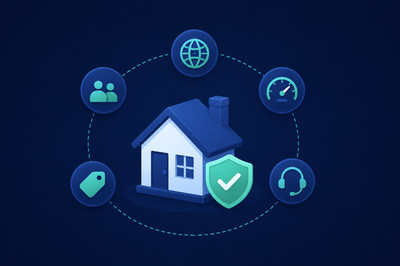
Key factors when choosing a residential proxy provider
7. How to verify residential proxy quality on IPFighter
Even when sourcing your connections from the market's best proxy providers, checking your connection quality before launching automated scripts is a critical step for your workflow. Using IPFighter as your primary testing environment lets you audit your proxies across several key areas:
-
IP reputation: It is crucial that each IP address maintains a clean IP reputation, meaning it is not associated with any prior spamming, fraud, or botting activity.
-
Verify proxy detection status: Determine whether websites can easily identify the connection as proxy traffic.
-
Analyze IP trust score: Review how security systems score your connection behavior, helping you fix potential issues before deploying your scripts.
-
Check ISP ownership: Verify that the IP actually belongs to the advertised ISP.
-
Confirm geolocation accuracy: Verify that the proxy’s location details align with your target region parameters, keeping your location footprints consistent.
-
Test leaks: Check for unexpected DNS or WebRTC leaks to prevent your local system details from slipping past the proxy layer.
Running these checks before deployment helps ensure that residential proxies perform as expected and remain suitable for long-term use.
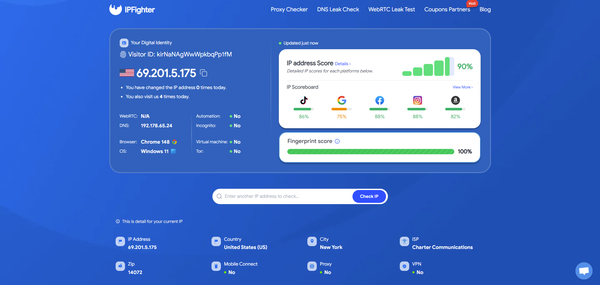
Check IP on IPFighter
Read more:
-
What is DNS? How the DNS system works on the internet
-
What is WebRTC? Exploring its architecture, use cases, and benefits
8. Conclusion
Residential proxies use real ISP-issued IP addresses, making them one of the most trusted proxy types available today. Their ability to provide higher trust levels, lower detection rates, and flexible geographic targeting makes them a popular choice for scraping, research, ad verification, and account management.
Choosing a reputable provider is only part of the process. Verifying proxy quality, IP reputation, geolocation accuracy, and leak status can help ensure consistent long-term performance. If you're considering buying a residential proxy, explore proxy promo codes, provider reviews, and additional proxy resources on IPFighter.
9. FAQ
What is a residential proxy?
A residential proxy uses an IP address assigned by an ISP to a real household or device, making traffic appear more legitimate to websites.
Are residential proxies legal?
Yes. Residential proxies are generally legal when used for lawful activities and in accordance with website terms of service.
Why are residential proxies more expensive?
Residential IPs are harder to obtain and maintain than datacenter IPs, resulting in higher operational costs.
Are residential proxies better than datacenter proxies?
They typically offer better trust and lower detection rates, while datacenter proxies usually provide faster speeds and lower costs.
How do residential proxies get their IP addresses?
They obtain IP addresses from real residential devices connected through participating networks or ISP partnerships.
What are rotating residential proxies?
Rotating residential proxies automatically change IP addresses after each request or session period.
Can residential proxies be detected?
No proxy is completely undetectable, but residential proxies are generally much harder to identify than datacenter proxies.
Read more

IPFoxy review: Are its pure rotating residential proxies worth it?


CatProxies review: What do its five proxy types offer?
Hidemyacc review 2026: Features, pricing and real fingerprint test results

Whitecloakproxy review: What to know before you buy

Geonix review: What makes its proxy services stand out?

ProxyWing review: Pricing, features, and real-world performance