

The need for seamless communication has grown exponentially in our connected world. From video calls with loved ones to online classes and virtual meetings, all rely on technologies that operate quietly in the background, unnoticed by most.
One such technology is WebRTC, a powerful tool enabling real-time communication directly within web browsers. This article dives into WebRTC’s architecture, real-world applications, and benefits while addressing common concerns.
What is WebRTC?
WebRTC, short for Web Real-Time Communication, is an open-source project that facilitates peer-to-peer communication between browsers and devices. Developed by Google in 2011, it allows users to share audio, video, and data without the need for additional software or plugins.
Imagine participating in a video conference or sharing files directly through your browser without downloading any extra tools. That’s the convenience this technology brings. It is the backbone of many modern applications, enabling seamless communication with minimal latency and high security.

WebRTC architecture
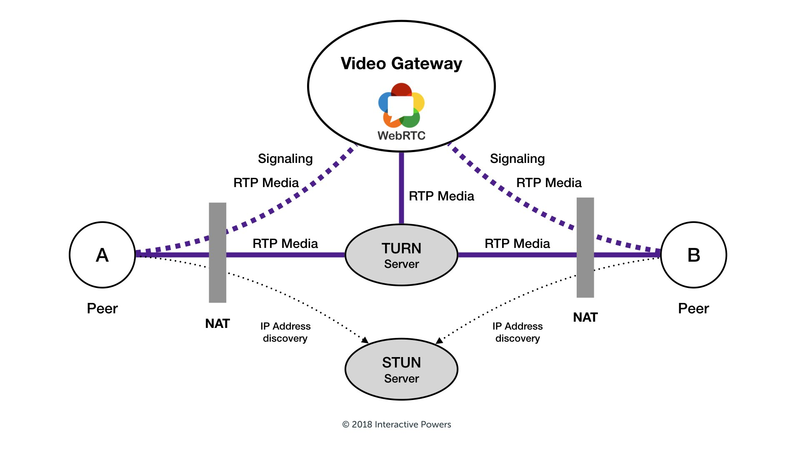
At its core, this technology is designed to simplify real-time communication. To achieve this, it relies on several key components:
1. Peer-to-peer connections
WebRTC enables direct communication between two devices without intermediaries. This peer-to-peer model ensures efficient data transfer while reducing reliance on centralized servers.
2. STUN servers
STUN (Session Traversal Utilities for NAT) helps devices identify their public IP addresses, ensuring connectivity even when users are behind firewalls.
3. TURN servers
TURN (Traversal Using Relays around NAT) acts as a fallback when direct peer-to-peer connections are not possible, relaying data through a server.
4. ICE framework
The ICE (Interactive Connectivity Establishment) framework manages how WebRTC establishes and maintains connections by prioritizing the best communication paths.
5. Security protocols
WebRTC uses DTLS (Datagram Transport Layer Security) and SRTP (Secure Real-time Transport Protocol) to encrypt data and ensure secure communication.
6. Signaling mechanism
While WebRTC handles communication, it requires external signaling protocols to exchange connection details. Signaling establishes the initial connection and negotiates terms, such as codecs and bandwidth.
Use cases of WebRTC
This versatile technology powers a wide range of applications across industries. Here are some of its most impactful use cases:
1. Video conferencing
Applications like Zoom, Google Meet, and Microsoft Teams leverage WebRTC to deliver high-quality video and audio. Its low latency and robust architecture make it ideal for virtual meetings and online classes.
2. Collaborative tools
The framework drives real-time collaboration in platforms like Miro and Figma, enabling users to work together seamlessly, regardless of location.
3. Customer support
Many businesses integrate this technology into their support systems, allowing instant communication between customers and support agents without requiring downloads.
4. IoT and smart devices
Its ability to handle data streams in real time makes it a valuable tool for IoT devices, from smart security cameras to connected home appliances.
5. Online gaming
Multiplayer games rely on it for real-time voice communication and data exchange, enhancing the gaming experience.

Benefits of WebRTC
WebRTC’s advantages make it a preferred choice for developers and businesses alike. Here’s why:
- Ease of use: WebRTC is built directly into modern browsers, enabling users to access its features without needing plugins or installations.
- Cross-platform compatibility: It works seamlessly across major browsers like Chrome, Firefox, Safari, and Edge, ensuring a consistent experience for users.
- Cost efficiency: By leveraging peer-to-peer connections, it eliminates the need for costly infrastructure such as centralized servers.
- Scalability: Whether for small team meetings or large virtual events, WebRTC’s adaptable architecture supports various scales of communication.
- Security: Built-in encryption ensures that all audio, video, and data streams remain secure, alleviating privacy concerns.
- Open-source community: As an open-source platform, it benefits from continuous enhancements and a vibrant developer community.
These benefits make WebRTC a powerful and reliable solution for modern communication needs.
Limitations and challenges
While this technology offers numerous benefits, it’s not without challenges:
- Network dependency: It relies heavily on network quality, and poor connectivity can cause interruptions or degraded call quality.
- Firewall and NAT issues: Establishing peer-to-peer connections can be challenging when users are behind strict firewalls or NAT configurations, often requiring STUN or TURN servers.
- Browser compatibility: While major browsers support the framework, occasional implementation inconsistencies can lead to compatibility issues.
- Complex setup: Configuring signaling servers and managing connections can present a steep learning curve for developers.
- IP leaks and privacy concerns: As more individuals seek anonymity online using proxies or VPNs, WebRTC can unintentionally expose real IP addresses. Many websites leverage this feature to detect and bypass proxies or VPNs, undermining users’ efforts to maintain privacy.
Despite these challenges, WebRTC’s continuous evolution addresses many of these concerns, making it a reliable solution.
Conclusion
WebRTC has transformed the way we communicate, enabling real-time audio, video, and data sharing with remarkable ease. Its robust architecture, diverse use cases, and significant benefits make it an essential tool for modern communication technologies.
We hope this article has clarified the question “what is WebRTC” by highlighting its capabilities and importance. As this technology continues to evolve, it promises to drive innovation across industries, unlocking new possibilities for secure, efficient, and seamless communication.
Frequently asked questions (FAQs)
1. How does WebRTC differ from WebSockets?
WebRTC and WebSockets serve distinct purposes. WebRTC is optimized for real-time audio, video, and data sharing directly between peers, while WebSockets are designed for persistent, bi-directional communication between a client and a server.
2. Can WebRTC work without an internet connection?
WebRTC requires an internet connection or a local network to establish peer-to-peer communication. Without connectivity, the initial signaling process cannot occur.
3. Is WebRTC secure for sensitive data transmission?
Yes, WebRTC employs encryption protocols like DTLS and SRTP to protect data, ensuring a secure exchange of audio, video, and other sensitive information.
Read more

IPFoxy review: Are its pure rotating residential proxies worth it?

CatProxies review: What do its five proxy types offer?

Hidemyacc review 2026: Features, pricing and real fingerprint test results

Whitecloakproxy review: What to know before you buy

Geonix review: What makes its proxy services stand out?
Floppydata review: A closer look at its proxy network