

Not all IP addresses are treated the same on the internet. Some can access websites smoothly, while others constantly face CAPTCHAs, login verification, or even blocks. So how do platforms decide whether your IP is trustworthy?
The answer lies in something called the IP trust score - a metric that helps determine whether an IP is safe or potentially risky. In this guide, IPFighter break down what IP trust score really means, what affects it, and how you can check and improve it effectively.
1. What is IP trust score?
Before understanding how to evaluate an IP, it’s important to know what this score actually represents.
An IP trust score is a numerical value that reflects how trustworthy an IP address appears to online systems. It is commonly presented on a scale such as 0-100 or 0-10, depending on the platform. This score is used to estimate whether an IP behaves like a legitimate user or resembles risky traffic, such as bots, automation tools, or suspicious activity.
In simple terms, the higher the trust score, the more likely the IP is treated as safe. The lower the score, the more likely it is flagged or restricted.
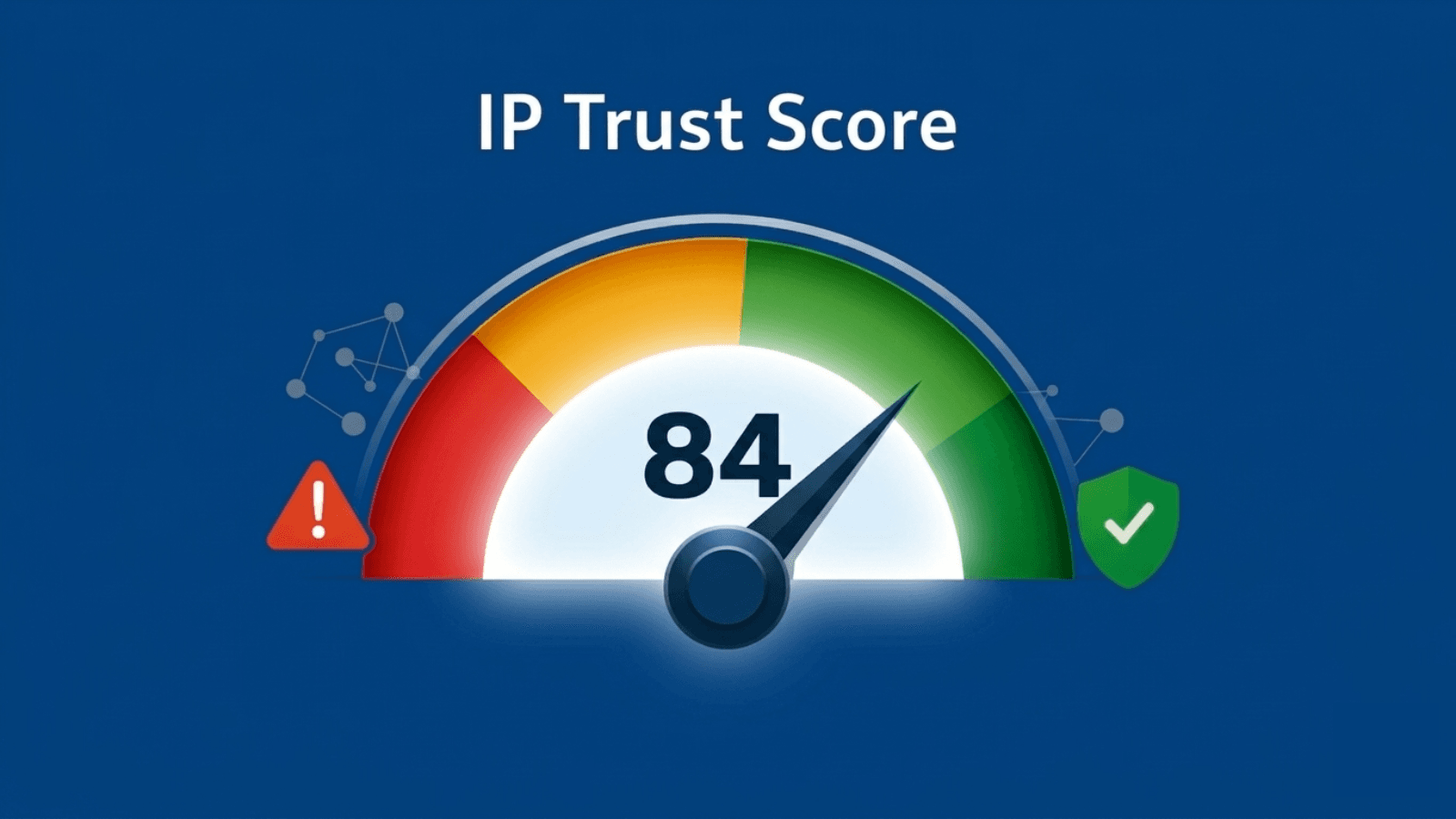
IP trust score
Discover more:
- How to improve IP score: A complete guide
-
What is an IP Address? Everything you need to know
-
What is IP reputation? How IP purity shapes trust
2. What factors determine IP trust score?
Now that we understand what an IP trust score is, the next question is: how is it calculated? Rather than being a random number, the score is generated based on a combination of signals and behavioral data collected over time.
Several key factors influence this evaluation:
-
History of activity: If an IP has been associated with spam, bot traffic, or fraudulent behavior, it will likely receive a lower score.
-
Proxy/VPN: Another factor is whether the IP is detected as part of a proxy or VPN network. Some platforms treat proxy traffic with caution, especially if it is widely shared or overused.
-
Blacklist status: Also plays a major role. If an IP appears in well-known databases such as Spamhaus or Barracuda, it may be flagged as risky. If you want to understand how these systems work, you can check top ip blacklist check tools that aggregate this kind of data.
-
Sending history: Additionally, systems analyze sending behavior, such as how frequently and how much data an IP transmits. Sudden spikes or abnormal patterns can raise red flags.
-
Abuse reports: There is also the matter of abuse reports, where users or platforms flag an IP for suspicious activity. The more reports associated with an IP, the lower its perceived trust.
-
WHOIS & geolocation: Finally, WHOIS and geolocation data help determine whether the IP ownership and location appear consistent and transparent.
It’s important to note that not all blacklists or signals carry the same weight. Being listed somewhere does not automatically mean the IP is unsafe, it only becomes a problem if it affects your specific use case.
3. What does an IP trust score actually tell you?
At first glance, it may seem like the IP trust score is a straightforward number you can rely on. However, the reality is more nuanced.
There is no universal standard for how trust scores are calculated or interpreted. Each platform whether it’s Google, Facebook, or a specific website has its own scoring system and thresholds. This means the same IP address can perform differently depending on where it is used. It might work perfectly fine on one platform but face restrictions on another.
Instead of viewing the score as a final judgment, it should be understood as a general signal of trustworthiness. It reflects patterns such as:
-
The IP’s historical behavior
-
How closely it resembles real human activity
-
Whether it shows signs of automation or abuse
In practical terms, an IP with a strong trust profile tends to offer a smoother experience. You are less likely to encounter CAPTCHAs, forced verifications, or login issues.
4. How to check IP trust score quickly with IPFighter
Understanding the concept is one thing, but applying it in real scenarios requires the right tools. If you want to evaluate an IP properly, you need more than just a single score. That’s where IPFighter comes in.
When you check an IP on IPFighter, you’ll get a comprehensive overview of its trust profile, including:
-
Comprehensive IP trust score: A central metric summarizing the overall reliability of your connection.
-
Platform-specific trust indicators: Tailored insights for major platforms like Google, Facebook, and TikTok.
-
Real-time blacklist monitoring: Checks against 50+ global databases to ensure your IP is clean.
-
DNS and WebRTC leak detection: Ensures your real identity isn't exposed behind the proxy.
-
Browser fingerprint details: Provides a Fingerprint Score and analyzes technical data (Canvas, WebGL, Fonts) to check your browser's security.
This combination of data gives you a much clearer understanding than relying on a single metric.
If you’re unsure about your current IP, you can first learn how to find ip address and then run a full check on the platform.
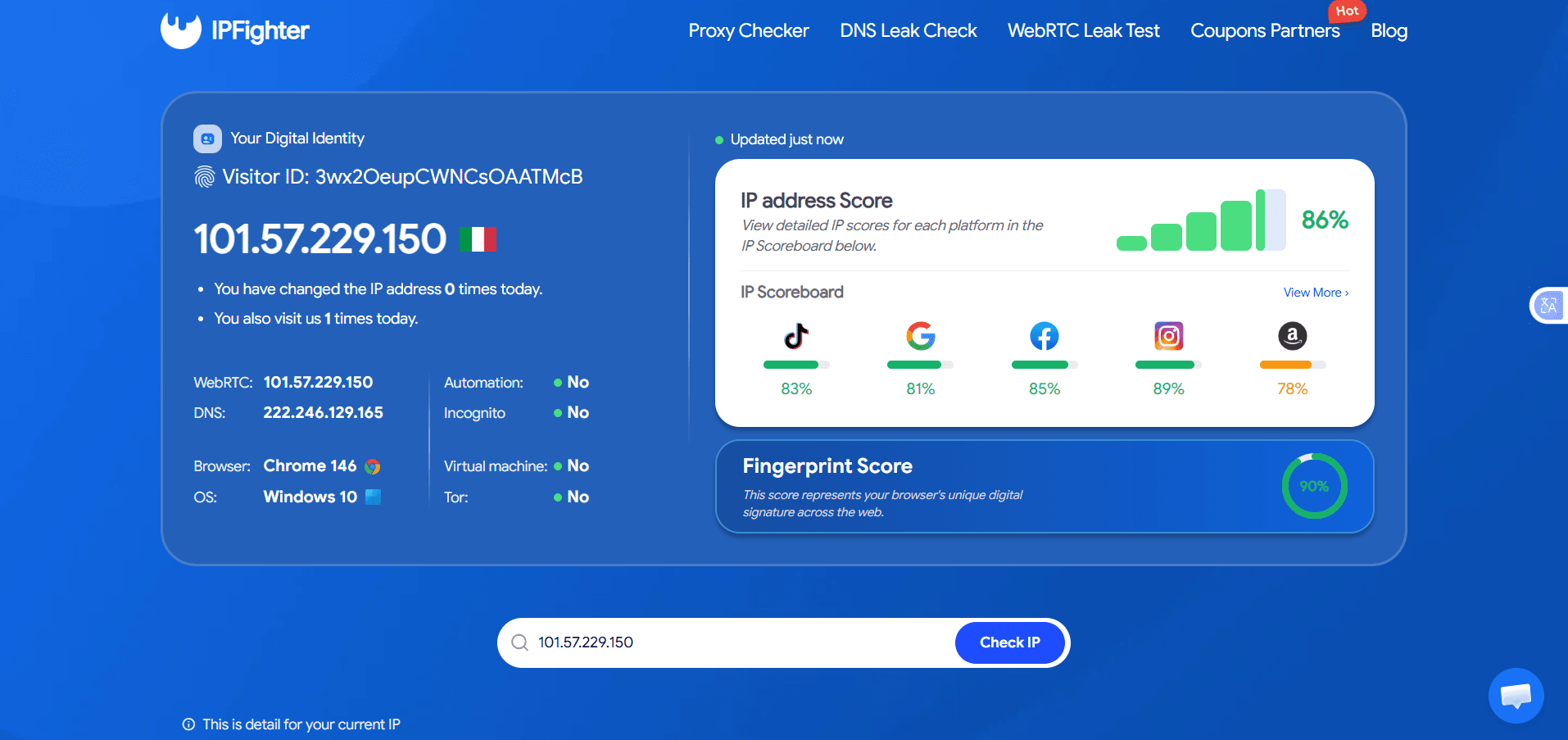
Check proxy on IPFighter
5. Why is your IP trust score low?
You might expect that IP trust score issues only happen when using proxies or VPNs. However, even if you are using a normal connection at home or in the office, your IP trust score can still be low. So why does this happen?
5.1. Dynamic IP and inherited “bad history”
One of the most common reasons is that most internet providers today use dynamic IP addresses. This means every time you restart your modem or reconnect to the network, you may receive a completely different IP. While this is completely normal, it also means the IP you are using may have been used by someone else before.
If that previous user engaged in activities such as spam, automation, or other suspicious behavior, the IP could already carry a negative history. When you are assigned that IP, you unintentionally “inherit” its reputation, even if your own usage is legitimate.
5.2. Shared networks and external impact
Another common scenario occurs in shared environments, such as offices, coworking spaces, or apartment buildings.
In these cases, multiple users access the internet through the same public IP. If one user performs actions that trigger platform restrictions, such as sending spam or running automated tools, the entire IP can be affected. As a result, other users on the same network may also experience issues like CAPTCHAs, login verification, or access limitations, even though they have done nothing wrong.
In some situations, the IP may also have been flagged in external reputation systems or databases due to past activity. These flags can persist for a while, continuing to impact the trust score.
6. How to improve your IP trust score
After understanding how trust scores work, the next step is knowing how to maintain or improve them. There is no perfect score that guarantees complete safety. However, an IP is generally considered reliable when it avoids major blacklist issues and does not trigger excessive verification steps.
-
Avoid spam/automation: Improving your IP trust score starts with avoiding harmful behavior. Activities like aggressive automation, spam, or repeated suspicious actions can quickly damage your IP’s reputation.
-
Avoid blacklisted IPs: It is also important not to reuse IPs that have already been flagged. Once an IP has a negative history, it becomes harder to restore trust.
-
Use a clean IP address: Using high-quality IP sources is another key factor. Clean residential, mobile, or private IPs tend to perform better than overused shared proxies. If you want to understand different IP types, you can explore what is private ip address and how it differs from public IP usage.
-
Maintaining "realistic" browsing behavior: Maintaining natural browsing behavior is equally important. Systems are designed to detect patterns that do not resemble real users, so consistency matters. In some cases, using a stable connection setup such as what is a static ip address can also help maintain a more predictable trust profile over time.
-
Monitor scores regularly: Finally, regularly monitoring your IP score allows you to catch issues early and take action before they escalate.
By following these practices consistently, you can build and maintain a more stable IP trust profile, reducing the risk of being flagged while ensuring smoother and more reliable online performance.
7. Conclusion
In summary, IP trust score is one of the most important indicators of IP address security. Regularly monitoring this score on IPFighter will help you avoid unnecessary account suspensions or access restrictions.
Additionally, don't forget to utilize proxy promo codes and exclusive codes from over 200 IPFighter partners to optimize your investment costs effectively!
8. FAQ
What is a good IP trust score?
A good IP trust score typically indicates that the IP has a clean history and behaves like a normal user. However, the exact threshold varies depending on the platform.
Can an IP trust score change over time?
Yes. IP trust scores are dynamic and can change based on how the IP is used over time.
Is a high trust score always safe?
Not necessarily. While a high score is a positive sign, real-world performance still depends on the platform you are using.
Why does my IP have a low trust score?
This could be due to past abuse, shared usage, blacklist entries, or suspicious activity patterns.
How often should I check my IP trust score?
It’s recommended to check your IP before using it for important tasks or when you notice unusual behavior.
Are there any websites that can quickly check IP addresse
Yes, there are several tools available that provide IP analysis. Platforms like IPFighter combine multiple signals to give a more complete view of your IP’s trust level.
Read more
What is an IP2 network? How it works, uses, and benefits

Explaining how to know if you have a DNS leak

How to know if you have a WebRTC leak: Reading your results
How to improve IP score: A complete guide
What is an IP fraud score? Reading the 0-100 scale
Mastering WebRTC control to prevent browser privacy leaks